The short answer
Most ice machines go down for one of five reasons: scale on the evaporator, a dirty condenser, an old water filter, heat around the machine, or worn sensors, pumps and valves. You can fix the dirty condenser, the old filter and the heat yourself. If it's still down after that, call a technician.
Scale on the evaporator
Hard water leaves minerals behind. Over time they coat the evaporator, the cold plate where the ice forms. The ice comes out thin, cloudy or soft, and the machine runs longer to fill the bin.
Scale builds a little every day. You won't notice it until the bin runs short on a busy night.
A regular cleaning and descaling stops it. Run the cleaning cycle with the cleaner your machine's maker approves, on the schedule in the manual. For most kitchens that's at least every six months, and more often with hard water.
If the scale is thick, or the ice is still poor after a cleaning, that's a job for a technician.
A dirty condenser
The condenser gets rid of the heat the machine pulls out of the water. On an air-cooled machine, a fan pulls room air across a coil. When that coil or its air filter is packed with dust and grease, the heat has nowhere to go.
The machine runs long, makes less ice and wears out parts faster.
You can fix this one. Check the air filter or front grille once a month, and wash it if it's dirty. Keep boxes, mops and buckets away from the vents. A full coil cleaning belongs on a technician's maintenance visit.
An old water filter
The water filter takes minerals and dirt out of the water before it turns to ice. That keeps the ice clear and clean tasting. It also slows the scale on the evaporator.
A clogged filter cuts the water flow. Low flow means less ice, and it can let the evaporator freeze up solid. When that happens, the machine stops making ice at all.
You can fix this one too. Change the filter at least every six months, and write the date on it. If nobody knows when it was last changed, change it today.
Heat around the machine
An ice machine works harder in a hot room. The hotter the air around it, the longer each batch takes. Keep the room under 90°F and give the machine space to breathe. If you can, keep it away from ovens, fryers and the dish machine.
Water temperature matters too. On many machines, water above 90°F freezes so slowly that it trips the freeze-cycle timer. The machine then shuts itself down to keep from damaging itself.
This one is yours to fix. Clear the space around it, get air moving through the room, and make sure the machine is fed from a cold water line.
Sensors, pumps and valves
Scale doesn't only coat the evaporator. It also builds up on the sensors that tell the machine when to drop the ice, and inside the pump that moves the water. A scaled sensor gives a false reading. A blocked pump starves the machine of water. Either one can stop the ice completely.
Water valves, control boards and fans wear out too.
So here's the rule. If you've cleaned it, changed the filter and cleared the vents, and it's still down, stop there and call. Swapping parts on a guess gets expensive, and you still won't have ice.
More guides for managers
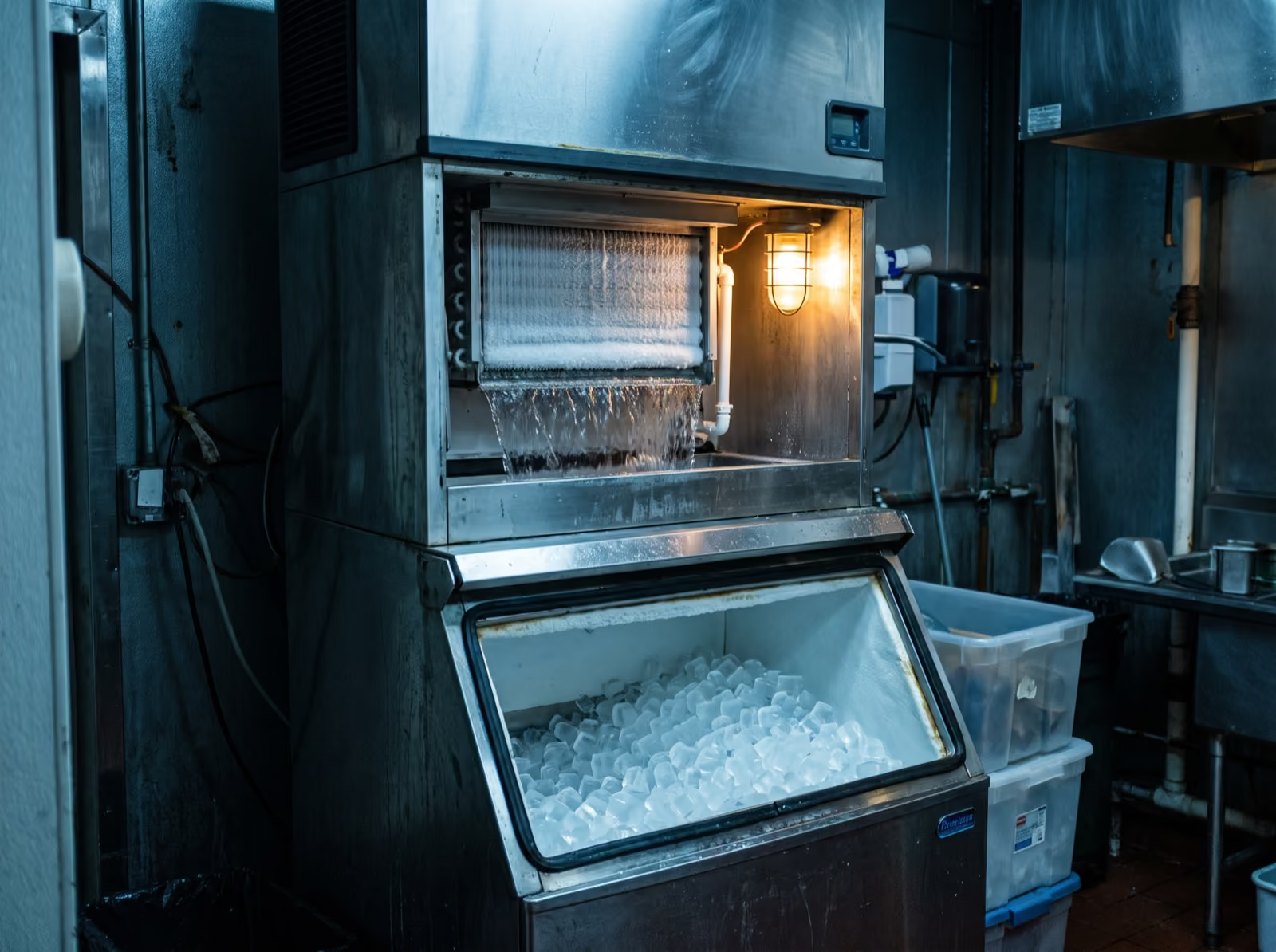 Free guide
A cleaning and descaling routine for your ice machine
A simple routine for a commercial ice machine: what staff do every shift, what you check each month, and when to descale and sanitize.
Read the guide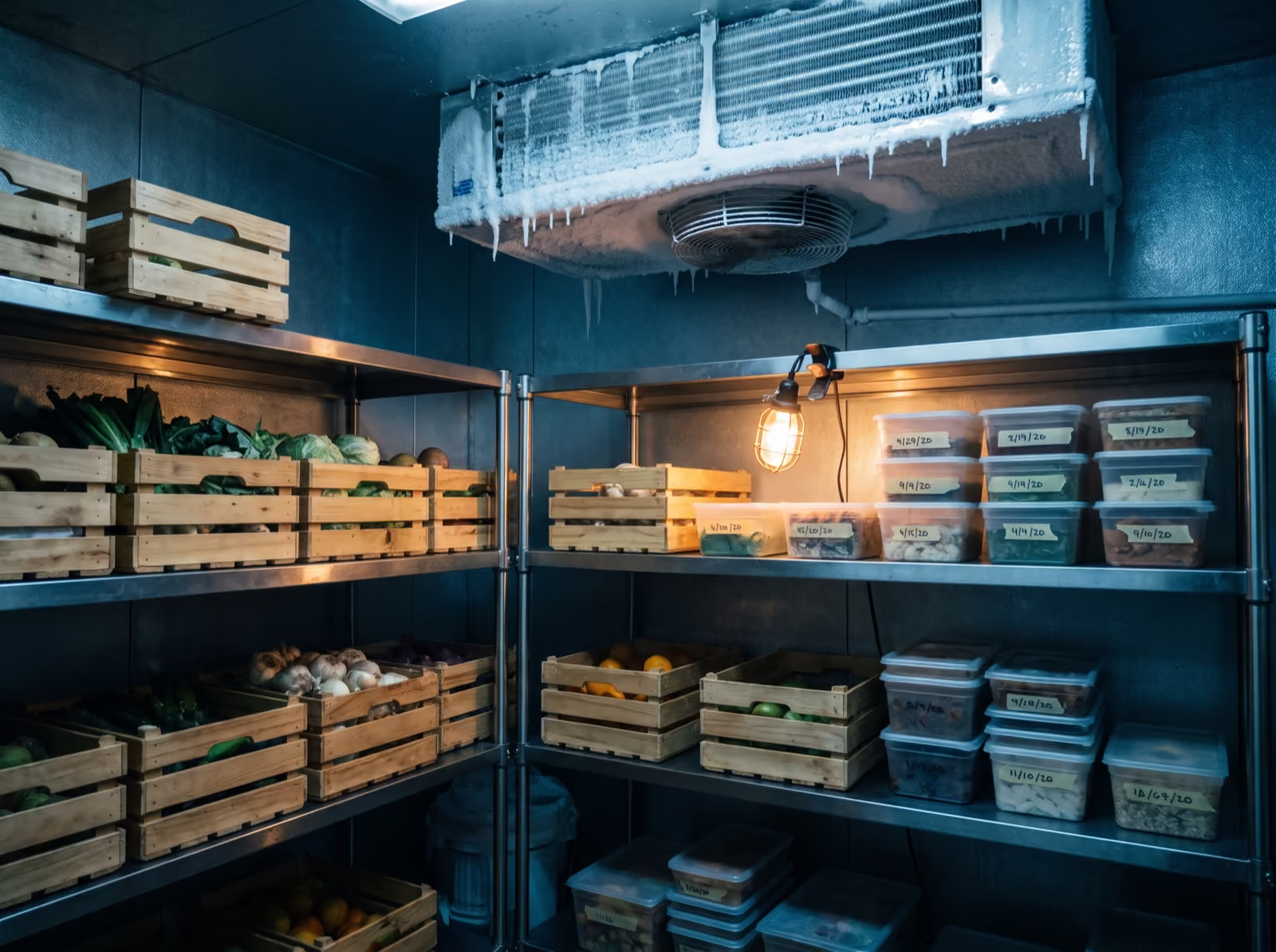 Free guide
The cheapest repair is a clean coil
A dirty condenser coil makes your walk-in run hot and long until the compressor quits. How to spot it, clean it, and how often.
Read the guide
Still no ice? Call now.
If your ice machine is down and you've worked through the list, call (636) 327-8349. For an emergency, a technician is on site within four hours.
And it gets fixed right the first time. 98% of our calls are completed in one trip.
See ice machine repair for the machines we work on and how a maintenance plan keeps this list short.