The short answer
Every shift, staff wash their hands, use one scoop kept outside the bin and keep the bin door closed. Once a month, check the air filter, the vents, the bin and the date on the water filter. At least every six months, descale and sanitize the machine and change the water filter.
Clean hands and one scoop
Most dirty ice comes from the people who handle it, not the machine. These habits stop it.
- Wash hands before touching the scoop or the bin.
- Use one dedicated ice scoop. Never scoop with a glass, a cup or your hands.
- Keep the scoop outside the bin, in a holder made for it.
- Carry ice in a container used only for ice.
- Keep the bin door closed between scoops.
Glass is the big one. A chipped glass in the bin means you dump all of the ice.
Bottles, food and old ice
The bin holds ice for drinks and nothing else. Keep these out of it.
- Bottles, cans or anything being chilled
- Food, fruit or garnish
- Ice that was used to chill something
- Unused ice from a bucket or a well, dumped back in
Throw ice out when it's been in contact with food or bottles, or when it's melting and you can't tell how long it's sat. Never refreeze melted ice.
Ice machine still acting up?
The filter, the vents and the bin
Once a month, take five minutes and look.
- Check the air filter or front grille on an air-cooled machine. Wash it if it's dusty or greasy.
- Make sure nothing is stacked against the vents.
- Look inside the bin and the chute for pink or black slime. If you see it, the machine needs a cleaning now, not at the next date.
- Check the date on the water filter.
- Watch the ice. Thin, soft or cloudy ice is the first sign of scale.
At least every six months
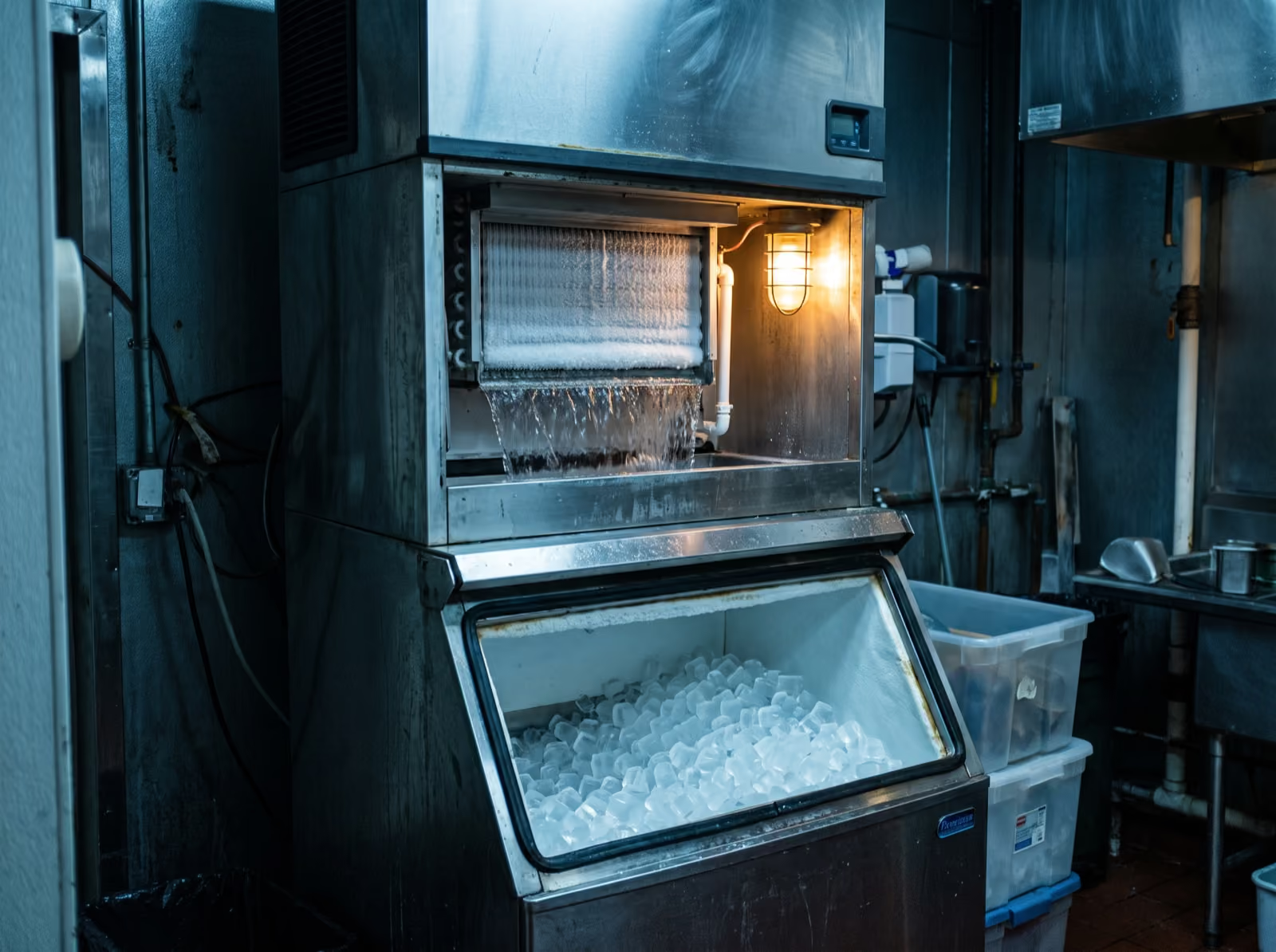
Hard water leaves minerals on the evaporator, the plate where ice forms. That scale slows the machine down and leads to most of the breakdowns we see.
Most machine makers call for a full descale and sanitize at least every six months. In hard water, do it more often. The steps are in your machine's manual. They usually go like this.
- Empty the bin and turn off the ice.
- Run the cleaning cycle with the cleaner your machine's maker approves.
- Run the sanitizing cycle.
- Wipe down the bin, the door and the scoop holder.
- Throw away the first batch of ice the machine makes after cleaning.
Use only the cleaner the maker names. The wrong chemical can damage the evaporator.
Twice a year, with the cleaning
The water filter takes out minerals and dirt before the water turns to ice. A clogged one cuts the water flow, which means less ice. It can even let the evaporator freeze up and stop the machine.
Change it at least every six months. Doing it on the same day as the descale makes it easy to remember. Write the date on the filter.
When the routine stops working
If the ice stays poor after a cleaning, or the machine is slow, loud or leaking, the problem is past what a cleaning fixes. It may be a sensor, a pump or a water valve. That's a job for a technician.
A maintenance plan puts the descale on our calendar instead of yours. We clean it, check the parts that wear, and catch the slow failure before the bin runs dry.
More guides for managers
 Free guide
Why commercial ice machines break down
The five reasons a commercial ice machine goes down, the three a manager can fix today, and when it's time to call a technician.
Read the guide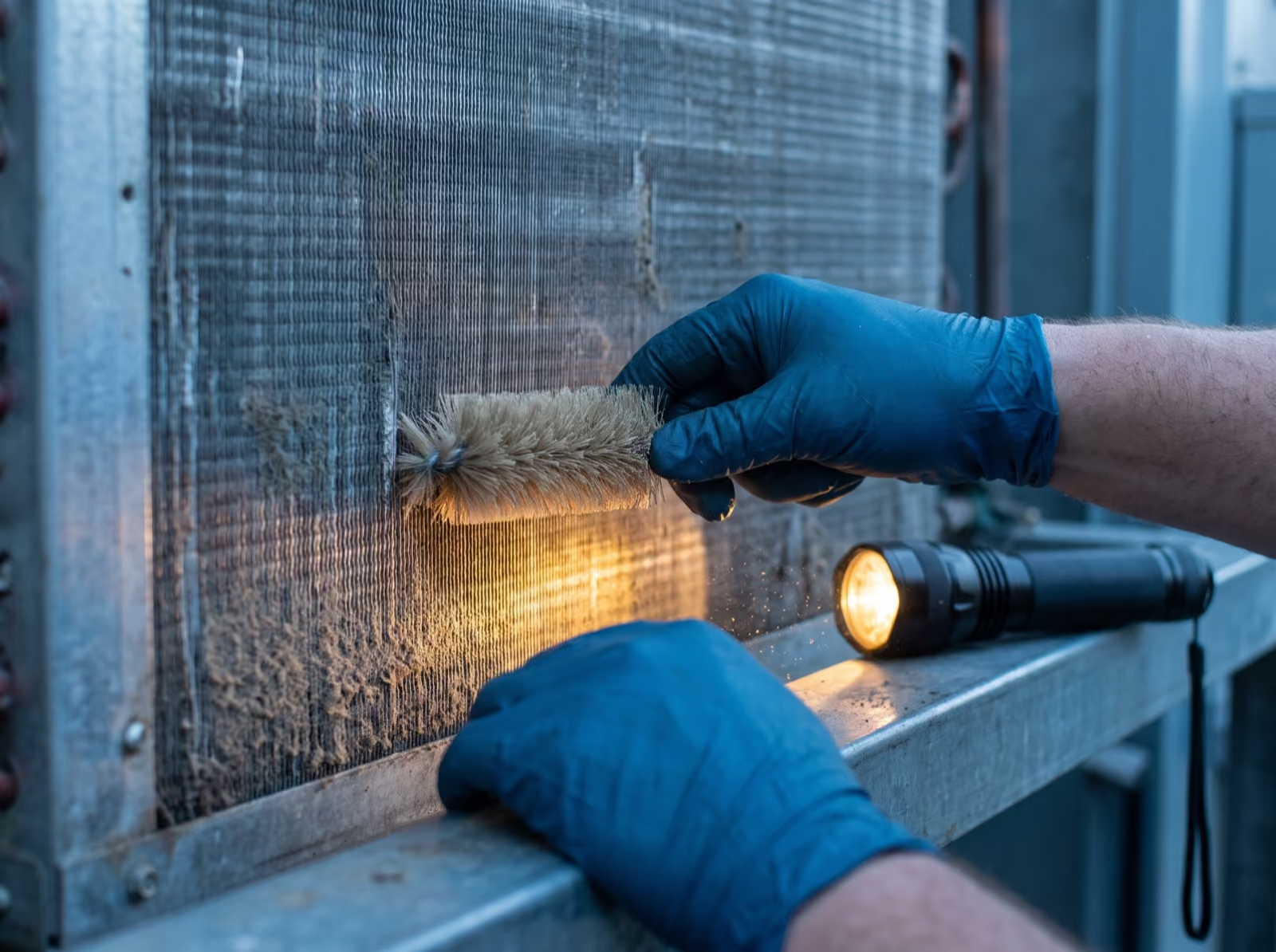 Free guide
What health inspectors check on your equipment
What a health inspector checks on your walk-ins, reach-ins, ice machine, dish machine and sinks, and how to get your equipment ready.
Read the guide
Ice machine down or due for a cleaning? Call.
See ice machine repair for the machines we work on and how maintenance works.
If it's down now, call (636) 327-8349. For an emergency, a technician is on site within four hours.