The short answer
A dirty condenser coil traps heat, so the compressor runs longer and hotter until it quits. Many manufacturers call for a cleaning every few months, and a unit next to the fryers may need it every month. If you can see dust or grease on the fins, the cleaning is past due.
It gets rid of the heat
Every walk-in, reach-in, prep table and ice machine has a condenser coil. It's the grid of thin metal fins behind a grille or up on the roof, with a fan blowing through it. Its job is to throw off the heat the unit pulls out of the box.
Air has to move through those fins for that to work. Anything that coats them gets in the way: dust, grease, flour, lint, smoke, even mildew. A layer of dirt acts like a blanket. The heat stays trapped.
The compressor pays for it
When the coil can't shed heat, the pressure and temperature inside the system climb. The compressor runs longer and hotter to keep the box cold. Here's how it shows up:
- The unit runs and runs and never seems to shut off.
- The box holds 38°F in the morning and creeps toward 45°F in the afternoon.
- Ice comes slow, or the machine stops making it.
- The power bill goes up with nothing else changed.
- The compressor is too hot to touch.
Run that way long enough and the compressor quits. That's the big repair, and it tends to happen on the hottest day of the summer, when the coil is working hardest. A coil cleaning costs a fraction of it.
Food is the other cost. Cold food has to stay at 41°F or below. If it sits above 41°F for more than four hours, it gets thrown out.
Want the coils cleaned on a schedule?
Grease, flour and city air
A coil near the fryers or the grill pulls in grease with the air. Grease grabs dust, and the two bake into a mat. A bakery or pizza kitchen gets flour in the fins. Rooftop condensers in the city collect more grit, leaves and cottonwood than ones out in open country.
Where the unit sits matters too. Boxes stacked against a reach-in grille can choke it. So can a condenser jammed into a hot, closed room. Neither one can breathe, even with a clean coil.
More often than most kitchens do it
Check your unit's manual first. Many manufacturers call for a cleaning every few months, and that's the longest you should let it go. A unit next to the fryers may need it every month. A walk-in condenser on the roof needs a look in spring, before the heat comes.
Here's a simple rule. If you can see dust or grease on the fins, the cleaning is past due.
Some of them, carefully
Your crew can keep reach-in and prep table grilles clear. Here's the safe way to do it:
- Turn the power off at the switch or breaker first.
- Use a soft brush and stroke along the fins, never across them.
- Vacuum the loose dirt off.
- Keep the grille and the space around it clear of boxes.
Leave the rest to a technician. Greasy coils need a coil cleaner and a rinse that keeps water off the electrical parts. Bent fins need combing straight. Walk-in and rooftop condensers mean ladders and live wiring.
On a maintenance visit we clean the coils and check refrigerant pressures. That's how we catch a weak compressor or a slow leak while it's still a small fix.
More guides for managers
 Free guide
Five signs your walk-in is about to fail
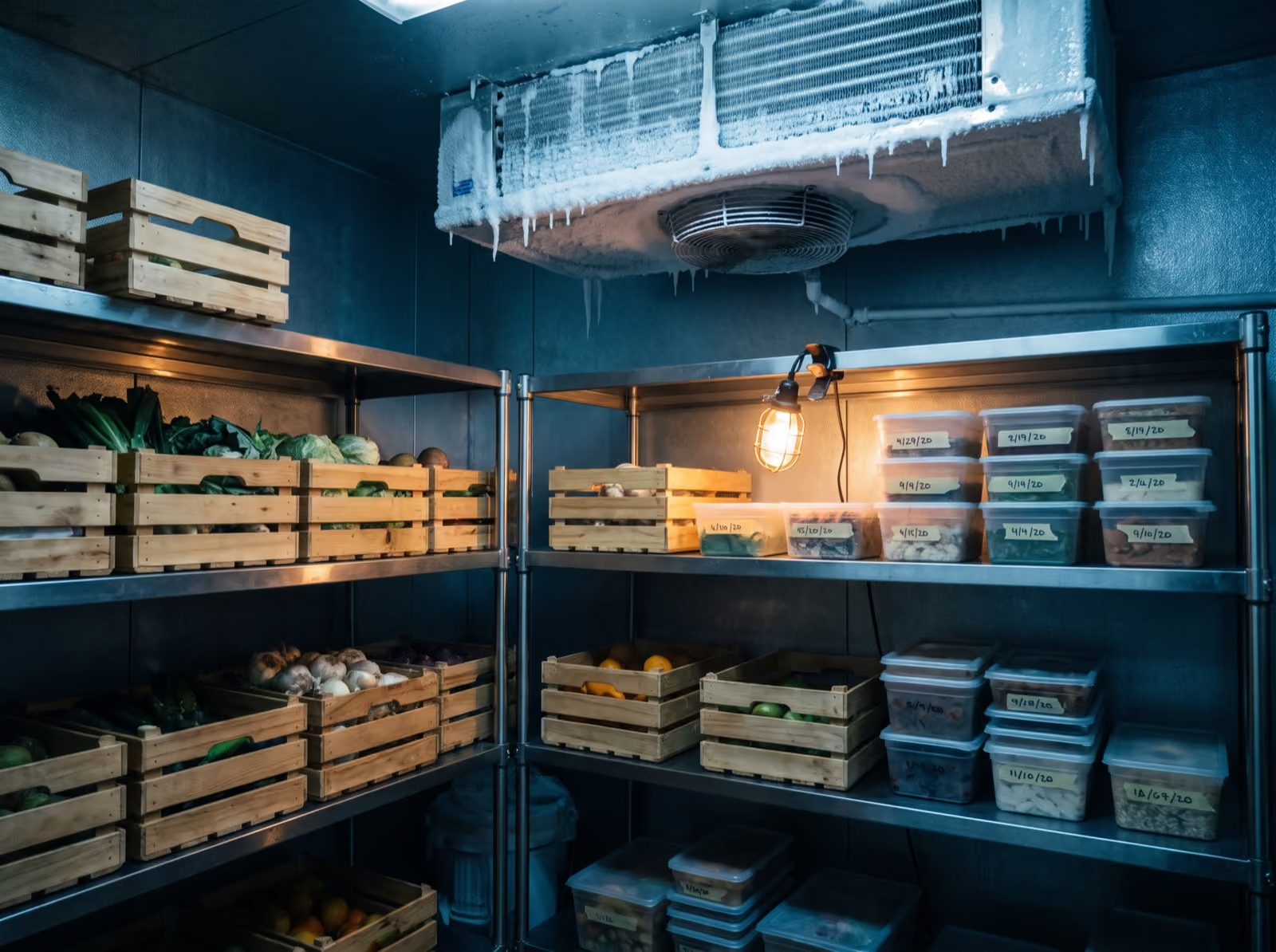
Warm readings, water on the floor, ice on the coil, a box that never stops running: the signs a walk-in gives before it goes down.
Read the guide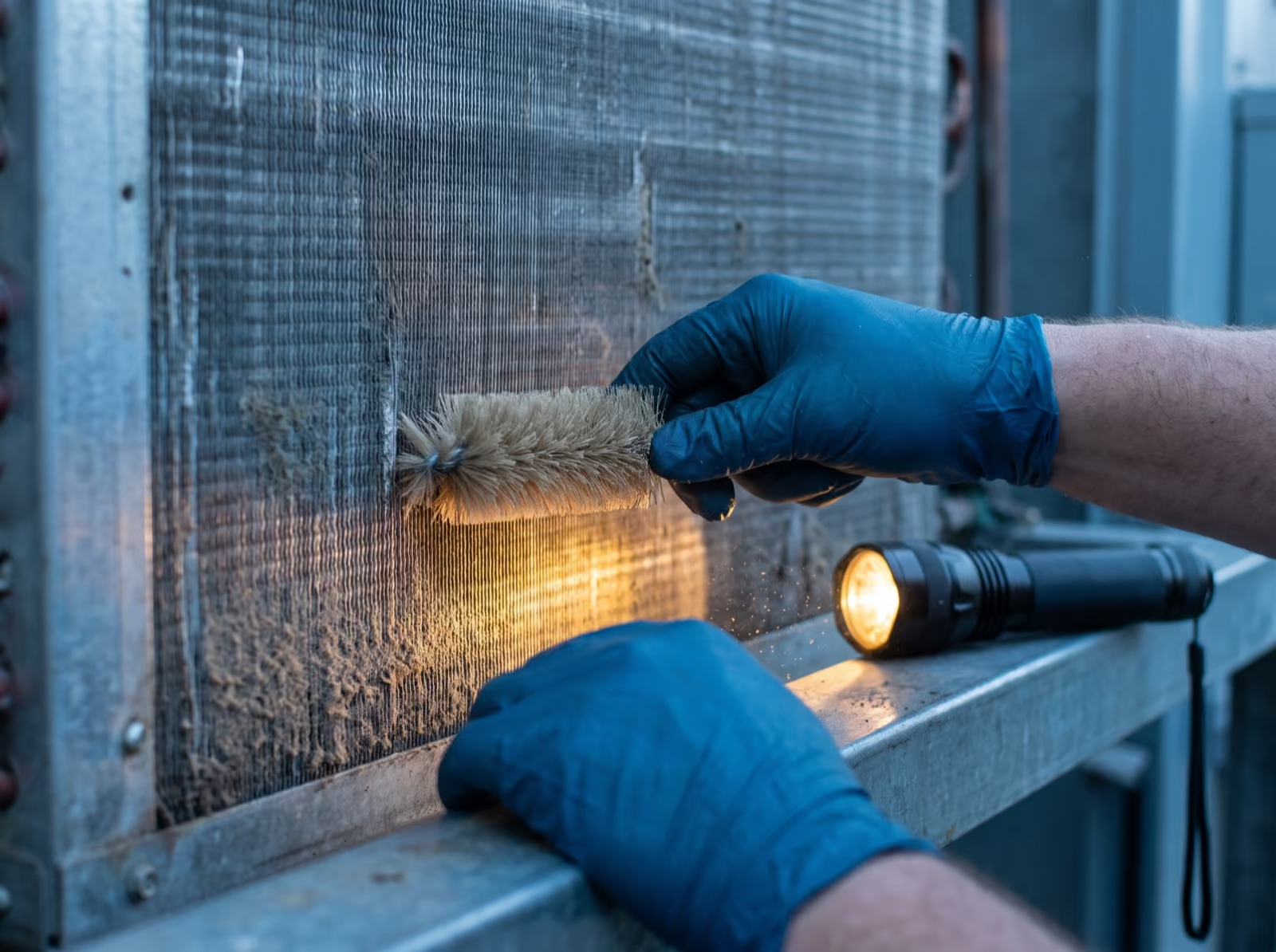 Free guide
A maintenance calendar for a restaurant group
A daily, monthly, quarterly and yearly maintenance calendar for restaurant groups, plus the plan for when something goes down anyway.
Read the guide
Put coil cleaning on a schedule
Set up planned maintenance, and the coils get cleaned before they cost you a compressor. See planned maintenance.
If the walk-in is already warm, don't wait. Call (636) 327-8349. For an emergency, we're on site within four hours, so you're back up and running before the product is lost.