The short answer
The five signs are a box running warm, water on the floor, ice on the coil, a unit that won't stop running and a power bill that jumps with nothing else changed. Check the setting, the door and the gasket first. If those check out, call a technician before the box goes down.
The first sign, and the one that costs the most
Cold food has to stay at 41°F or below. If the walk-in reads a few degrees high, or food spoils before its date, the box is losing the fight.
Check the easy things first.
- Make sure the setting didn't get bumped.
- Check that the door closes on its own and seals all the way around.
- Look at the door gasket for tears, gaps or a flat spot.
- Make sure boxes aren't blocking the fan or stacked against the coil.
If those all check out, the cause is usually a bad fan, a failing temperature sensor or a refrigeration problem. Those need a technician.
Keep a log. Write down the temperature at the start and end of every shift. A walk-in that creeps up a degree a week is telling you something.
A drain, a pan or a fan
A puddle under or around the walk-in is never normal. The common causes are a clogged drain line, a cracked drain pan or a fan that isn't working.
A clogged drain line is sometimes a simple clean-out. A cracked pan or a failed fan needs a part. Either way, water on a kitchen floor is a slip waiting to happen, so don't let it sit.
Frost where it shouldn't be
Look up at the evaporator, the coil with the fans inside the box. A light frost can be normal between defrosts. A thick block of ice is not.
Ice on the coil blocks the air, so the box can't stay cold. It often points to a door that doesn't seal, a door that's propped open too long, or a defrost system that has quit.
Frost around the door frame tells you warm air is getting in. Start with the gasket and the door closer.
Noise and a compressor that never rests
Every walk-in hums. What you're listening for is new noise: buzzing, rattling, grinding, or a compressor that never shuts off.
A unit that runs nonstop is working too hard. Dirty condenser coils, a fan going bad, low refrigerant or a failing compressor can all cause it. A compressor is the most expensive part of the system, and it's the one that pays for all that extra running.
If the sound changed, call before it stops.
The quiet sign
If your electric bill jumps and nothing else changed, look at the walk-in. A box with dirty coils, a bad door seal or low refrigerant runs longer to hold the same temperature. You pay for every extra hour.
It may not be the walk-in. Ice machines and other equipment fail the same slow way. But the walk-in is the biggest box in the kitchen, so start there.
More guides for managers
 Free guide
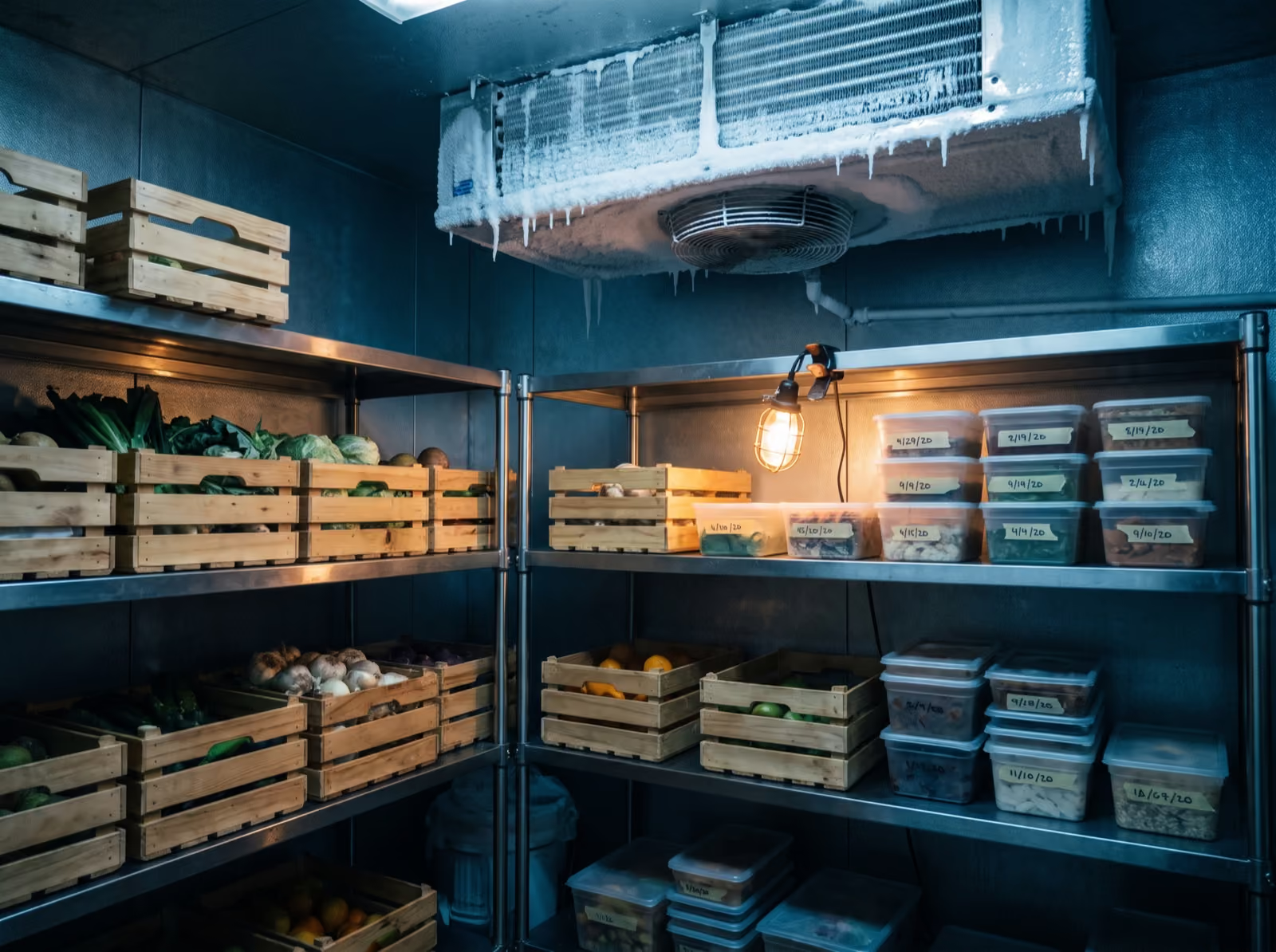
41°F and the four-hour clock: what to do when your walk-in runs warm
Cold food must stay at 41°F or below. Here's how to check your walk-in, what the four-hour clock means, and what to do first.
Read the guide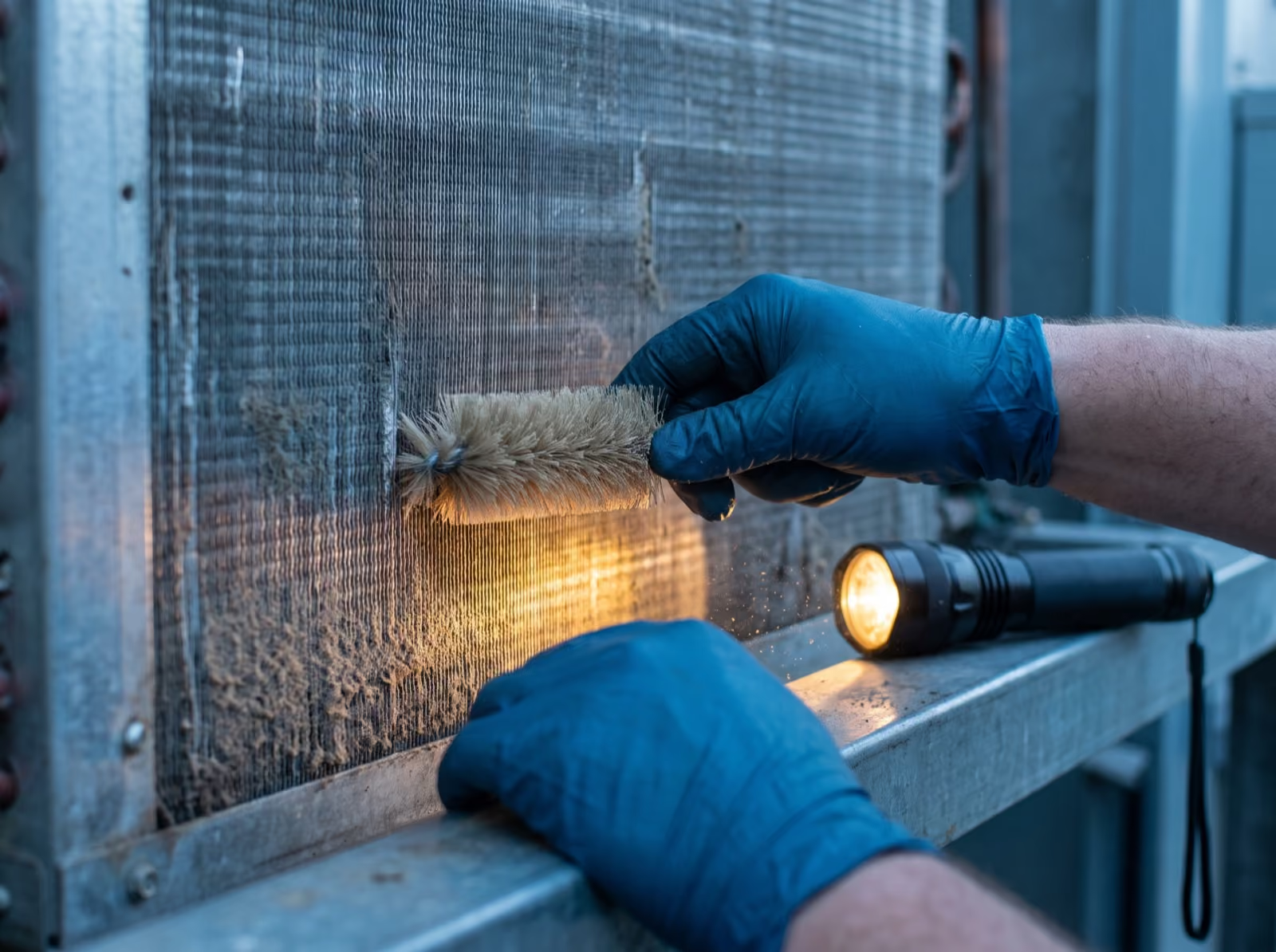 Free guide
The cheapest repair is a clean coil
A dirty condenser coil makes your walk-in run hot and long until the compressor quits. How to spot it, clean it, and how often.
Read the guide
Seeing one of these signs? Call before it goes down.
A small problem caught early is a single service call. The same problem caught at closing can cost you the stock.
See refrigeration repair for what we fix and how a maintenance plan catches these signs for you.
If the walk-in is down now, call (636) 327-8349. For an emergency, a technician is on site within four hours. And it stays fixed. 98% of our calls are completed in one trip.