The short answer
Before summer, change the filters, clean the coils, clear the drain, check the belts and test the cooling on a warm day. Have a technician check the refrigerant and electrical parts. A rooftop unit that struggles in May will fail in July, when everyone else is calling too.
The kitchen fights it all day
Ovens, fryers and dish machines put heat into the building from open to close. The hood pulls air out, and make-up air brings outside air in to replace it. In summer, that outside air is hot and wet.
The rooftop unit has to cool all of that, plus a full dining room. It runs longer and harder than the AC in an office of the same size.
Four things
- Filters. Change them on schedule, often monthly in a restaurant. Grease in the air clogs them faster than in other buildings.
- Thermostat. Check that it's set right, reads the right temperature and runs on its schedule. Keep the fan on auto unless your technician says otherwise.
- Vents and returns. Make sure nothing is blocking them inside: no stacked chairs, boxes or decorations.
- Water. Look for water stains on ceiling tiles under or near the unit. That can mean a clogged drain line.
Rooftop unit struggling already?
The parts on the roof
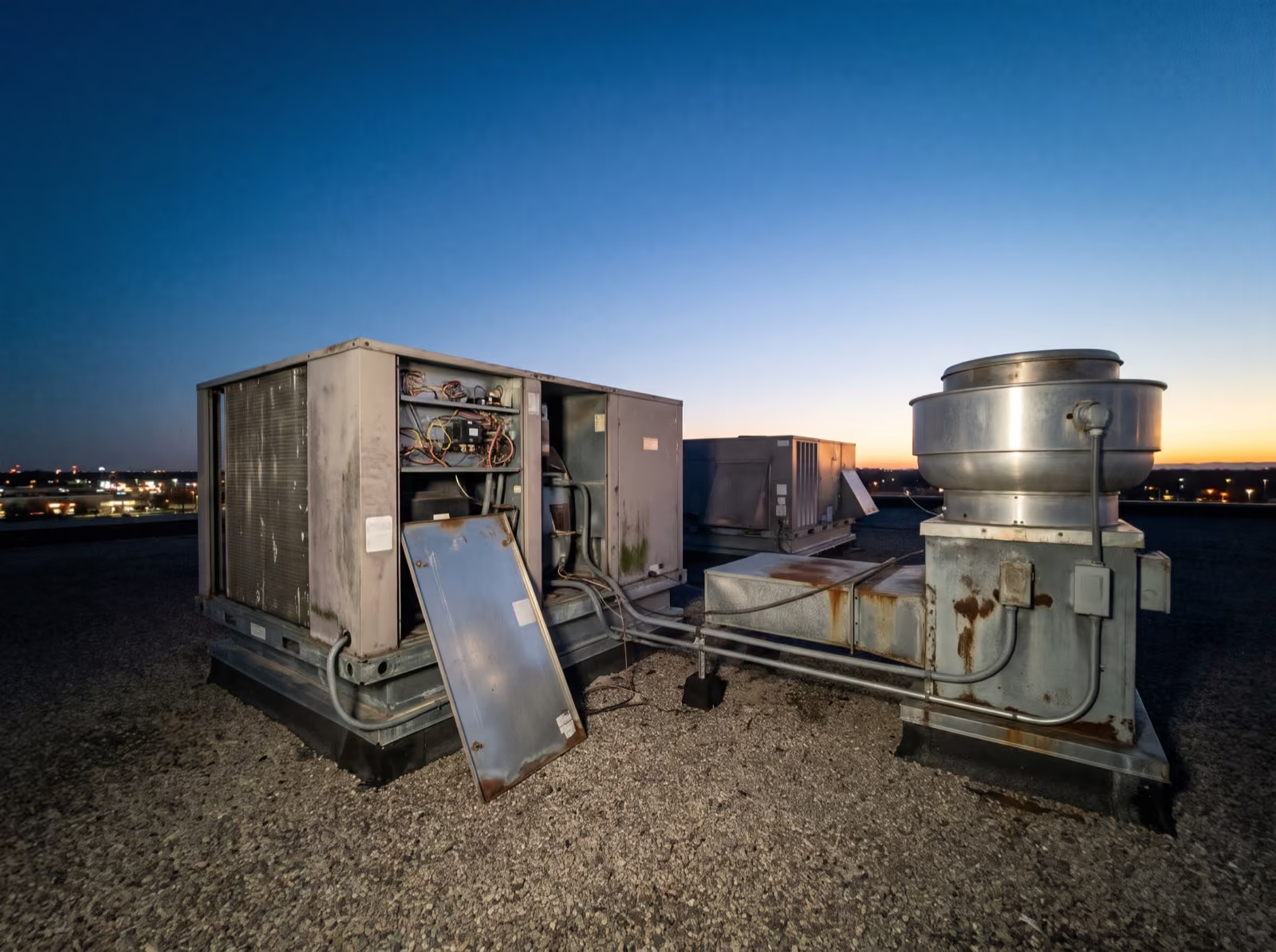
A spring visit covers what the crew can't reach or shouldn't touch.
- Coils. The condenser coil outside and the evaporator coil inside collect dirt, grease and cottonwood. Dirty coils can't move heat.
- Belts and motors. A worn belt slips and squeals. A tired motor runs hot.
- Refrigerant. Low refrigerant means a leak, and the unit can't cool properly.
- Electrical parts. Capacitors and contactors wear out, and they tend to fail on the first hot day.
- Drain pan and line. A clogged drain overflows into the ceiling.
- Economizer. On units that have one, it should open and close as designed.
Hot kitchens cost more than comfort
A kitchen that runs too hot wears on the crew and the equipment. Reach-ins near the line work harder. Cooks move slower.
If the kitchen is hot even with the AC running, the problem may be the balance between the hood and the make-up air. That's worth a look at the same visit.
Before the first heat wave
Call in spring if the unit made noise, ran nonstop or left warm spots last summer. Call any time it blows warm air, freezes up, trips the breaker or drips water. Repairs in April are faster than repairs in July, when every technician in town is busy.
More guides for managers
 Free guide
A winter checklist for restaurant HVAC
A winter checklist for restaurant HVAC: filters, heat, make-up air and frozen pipes, done before the first hard freeze.
Read the guide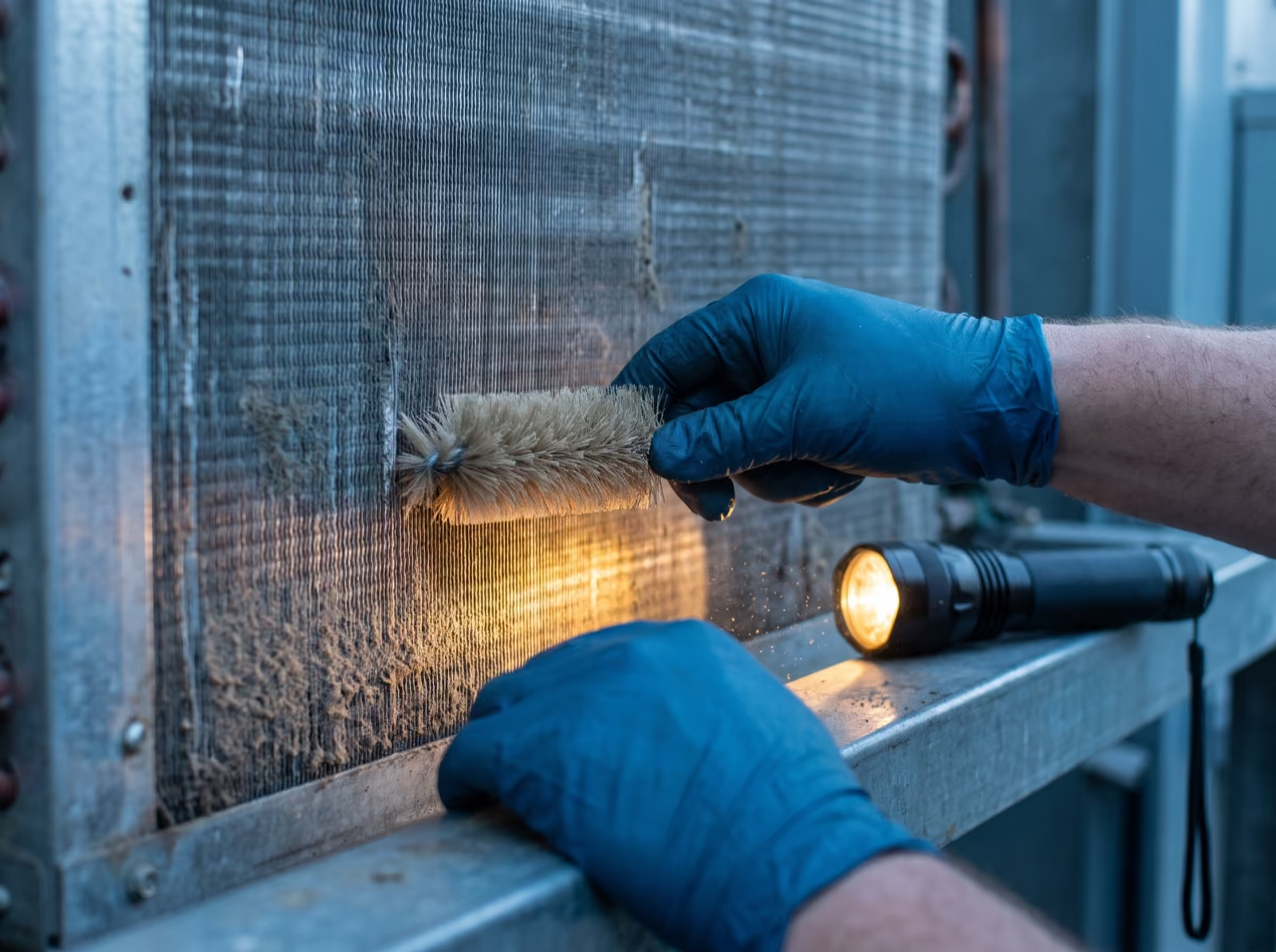 Free guide
Make-up air, explained for restaurant managers
What a make-up air unit does, the signs yours is down, and what your crew can check before you call for service.
Read the guide
Dining room hot? Call before the weekend.
A rooftop unit that can't keep up costs you comfort, staff and covers. Most failures give a warning first.
See restaurant HVAC for what we service. Call (636) 327-8349. For an emergency, a technician is on site within four hours. And it stays fixed. 98% of our calls are completed in one trip.