The short answer
Test the heat on a mild day in October or early November, before you need it. Change the filters, check that the make-up air sends in warm air, test the carbon monoxide alarms and wrap exposed pipes. Keep the whole building at 55°F or warmer, around the clock, so the pipes don't freeze.
In the fall, before you need the heat
Rooftop units sit all summer with the heat off. The first time they fire up for the season is when you find out what failed. That's usually a cold morning, with the doors about to open and every other business in town calling for service, too.
So test the heat on a mild day in October or early November. A little burning-dust smell the first time is normal. If the heat doesn't come on, or the smell doesn't fade, you still have time to get it fixed.
Eight things to check
- Change the filters on every rooftop unit. A clogged filter cuts the airflow, so the unit runs longer, and some furnaces shut off when they overheat.
- Run the heat on every unit, and check that each area warms up: the dining room, the bar, the kitchen and the restrooms.
- Turn on the hoods and check that the make-up air unit sends in warm air, not cold.
- Test your carbon monoxide alarms. Gas heat runs hardest in winter.
- Check the thermostat schedules. Make sure the overnight setting never drops below 55°F.
- Walk the building for cold spots: loading docks, storage rooms, back halls and pipes along outside walls.
- Wrap exposed water pipes in those cold spots with insulation.
- Find the main water shutoff, and make sure every manager knows where it is.
Heat the spaces you never see
A frozen pipe can split. Then it floods the building when it thaws, often at night when nobody is there.
Your pipes run above the ceiling, under the floor and along outside walls. Those spaces get much colder than the dining room. It's tempting to turn the heat way down on the nights and days you're closed. That's exactly when pipes freeze.
- Keep the whole building at 55°F or warmer, around the clock, even when you're closed.
- In a hard cold snap, open the cabinet doors under sinks on outside walls, so warm air reaches the pipes.
- On the coldest nights, leave a faucet on those walls dripping.
- If a pipe bursts, shut off the water at the main before you do anything else.
Air coming in where it shouldn't
In winter a dining room can feel warm in the middle and cold by the door. One common cause is the hoods pulling out more air than the make-up air unit brings back. The building makes up the difference through the front door, and every time it opens, cold air rushes in.
Check that the make-up air unit runs and heats when the hoods are on. Check the door closers and the weather stripping. If one area stays cold with the heat on, that rooftop unit may have a heating problem of its own.
Signs the heat needs a technician
- A unit blows cold air with the heat on.
- The heat comes on, then shuts off after a few minutes, over and over.
- The make-up air unit blows cold air into the kitchen.
- A pilot light keeps going out.
- One area won't warm up, no matter where the thermostat is set.
Two signs mean get out first. If you smell gas, get everyone outside and call the gas company from there. If a carbon monoxide alarm goes off, get everyone outside and call 911.
For an emergency, FastFix is on site within four hours. And it stays fixed: 98% of our calls are completed in one trip.
More guides for managers
 Free guide
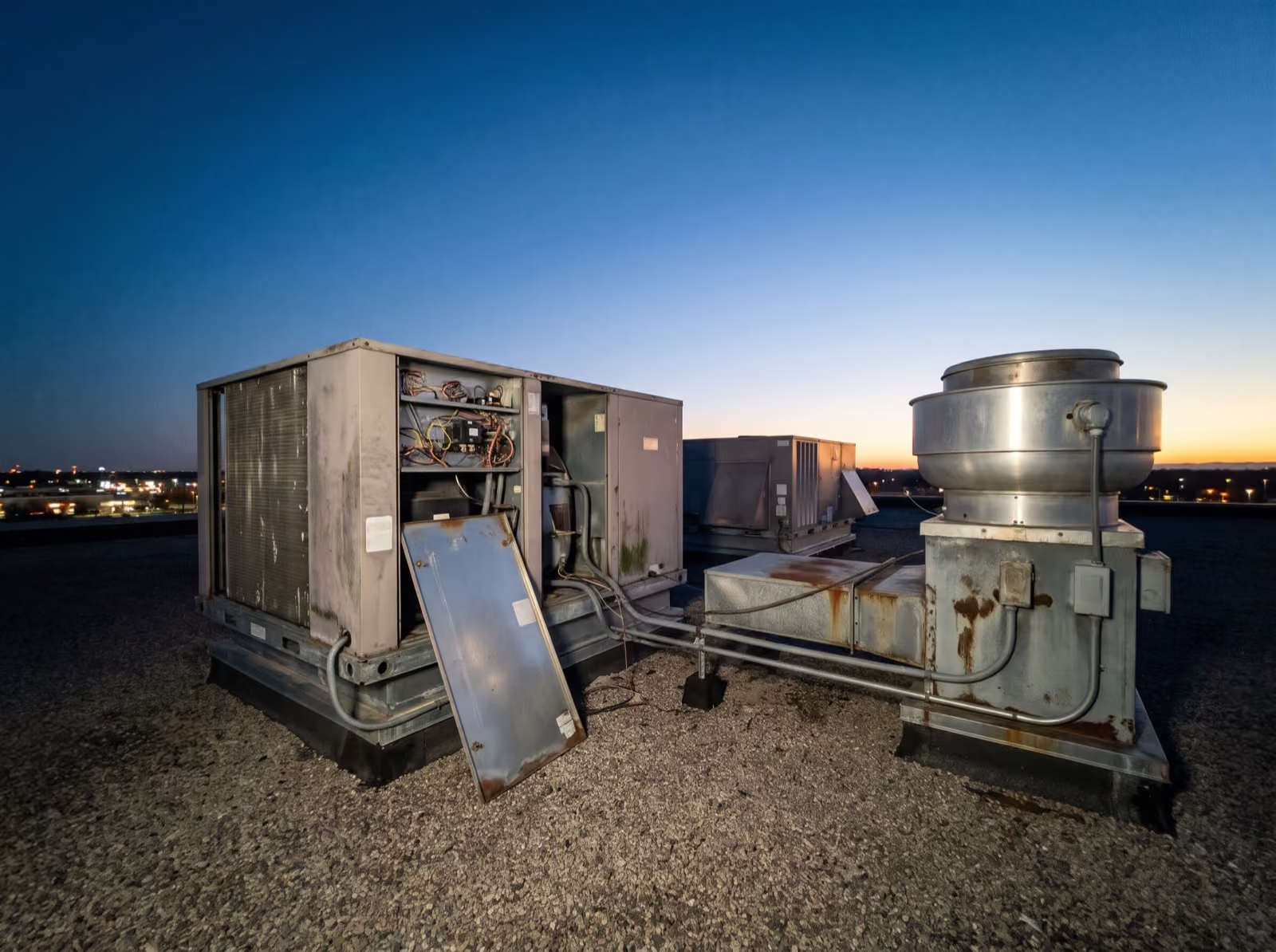
Make-up air, explained for restaurant managers
What a make-up air unit does, the signs yours is down, and what your crew can check before you call for service.
Read the guide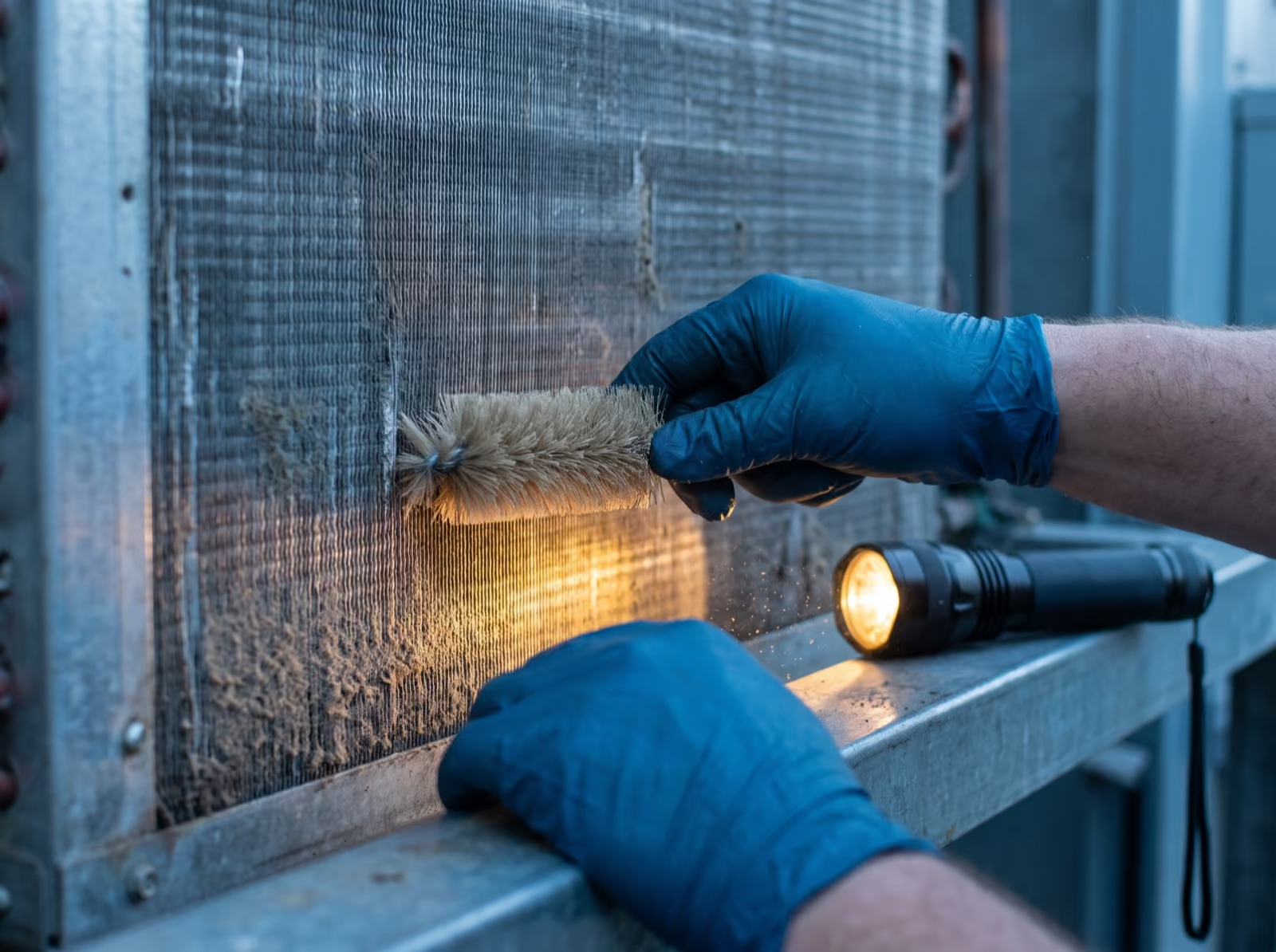 Free guide
A maintenance calendar for a restaurant group
A daily, monthly, quarterly and yearly maintenance calendar for restaurant groups, plus the plan for when something goes down anyway.
Read the guide
Want the heat checked before the cold sets in?
See what we service on our restaurant HVAC page, or call (636) 327-8349 to get your units looked at this fall.