The short answer
A make-up air unit brings fresh air in from outside to replace the air your hoods pull out. When it's down, the building goes negative: doors slam or whistle, cold air pours in and smoke rolls out of the hood. It can also pull carbon monoxide back down a flue, so call for service if a pilot light keeps going out.
It replaces the air your hoods pull out
Every exhaust hood is a big fan pointed at the sky. It pulls smoke, heat and grease out of the kitchen. That air has to come from somewhere.
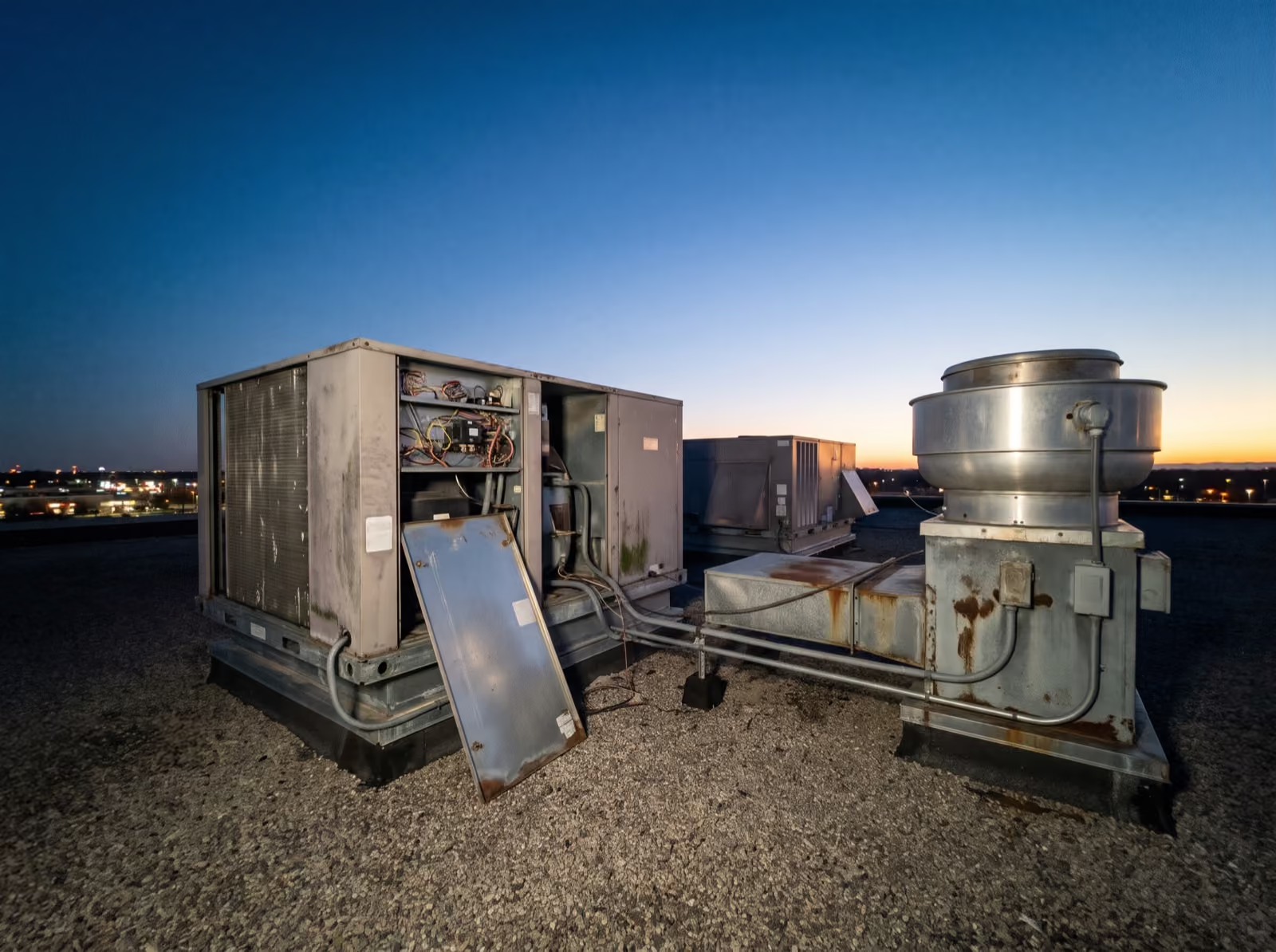
A make-up air unit brings fresh air in from outside to replace it. It usually sits on the roof and runs when the hoods run. In winter it heats the outside air before it comes in. Some units cool it in summer, too.
When the two match, the kitchen breathes. When the hoods pull out more than the unit brings in, the building goes negative. That means it tries to pull air in through every door, crack and vent it can find.
Doors, drafts and smoke
You don't need a gauge. The building tells you.
- The back door is hard to pull open, or it slams shut on its own.
- Doors whistle when the hoods are on.
- Cold air pours in around the front door in winter.
- Smoke rolls out the front of the hood instead of going up.
- Grease builds up faster on the walls, the ceiling tiles and the top of the line.
- The dining room smells like the fryer.
- Pilot lights blow out on the water heater, the furnace or the line.
If you see two or three of these, the make-up air unit is likely down, set wrong or too small for the hoods.
Make-up air not keeping up?
Weak hoods and fumes that come back in
Hoods need replacement air to work. Starve them and they can't catch the smoke and grease. The grease they miss lands on every surface, and your crew spends more time scrubbing it off.
The bigger risk is back drafting. Gas water heaters, furnaces and some cooking equipment send their exhaust up a flue. When the building is negative, air can get pulled down that flue instead of up it. That can bring carbon monoxide back into the kitchen. Test your carbon monoxide alarms, and call for service if a pilot light keeps going out.
It costs you money, too. A negative building pulls in outside air through gaps that nobody heats or cools. Your rooftop units run longer to keep up, and the utility bill climbs.
Five quick checks
- Turn on the hoods, then stand under the make-up air vent and feel for air.
- In winter, feel whether that air is warm. Cold air from the vent means the heater is out.
- Have someone check that the intake on the roof isn't blocked by snow, leaves or trash.
- Ask when the unit's filters were last changed. Clogged filters choke the airflow.
- Write down which doors whistle or slam, and when. It helps the technician find the problem faster.
One more thing. Don't shut the make-up air off because the kitchen feels cold in winter. That makes every problem above worse. Get the heater fixed instead.
Someone who looks at the whole system
A make-up air unit doesn't work alone. It works with the hoods, the exhaust fans and the rooftop units. Fix one box and ignore the rest, and you'll have the same problem next month. A good technician checks the fans, belts, filters, heater and controls, and then how the supply balances with the exhaust.
FastFix works on restaurant HVAC, make-up air and kitchen exhaust, along with refrigeration and the cook line. One call covers all of it.
For an emergency, we're on site within four hours. And the repair holds: 98% of our calls are completed in one trip.
More guides for managers
 Free guide
A winter checklist for restaurant HVAC
A winter checklist for restaurant HVAC: filters, heat, make-up air and frozen pipes, done before the first hard freeze.
Read the guide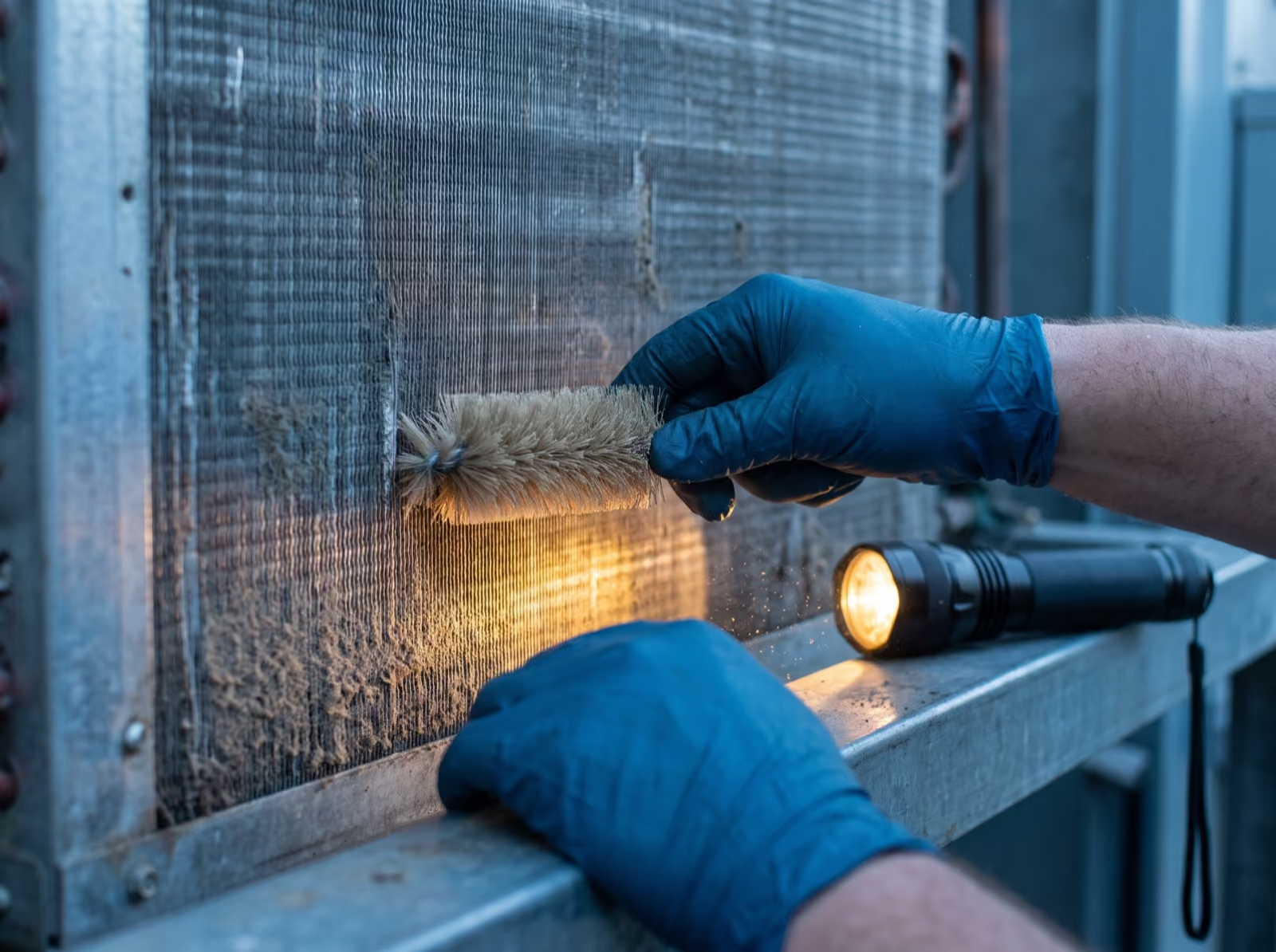 Free guide
A maintenance calendar for a restaurant group
A daily, monthly, quarterly and yearly maintenance calendar for restaurant groups, plus the plan for when something goes down anyway.
Read the guide
Doors slamming or smoke rolling out of the hood?
See what we service on our restaurant HVAC page, or call (636) 327-8349 and we'll get the air moving again.