The short answer
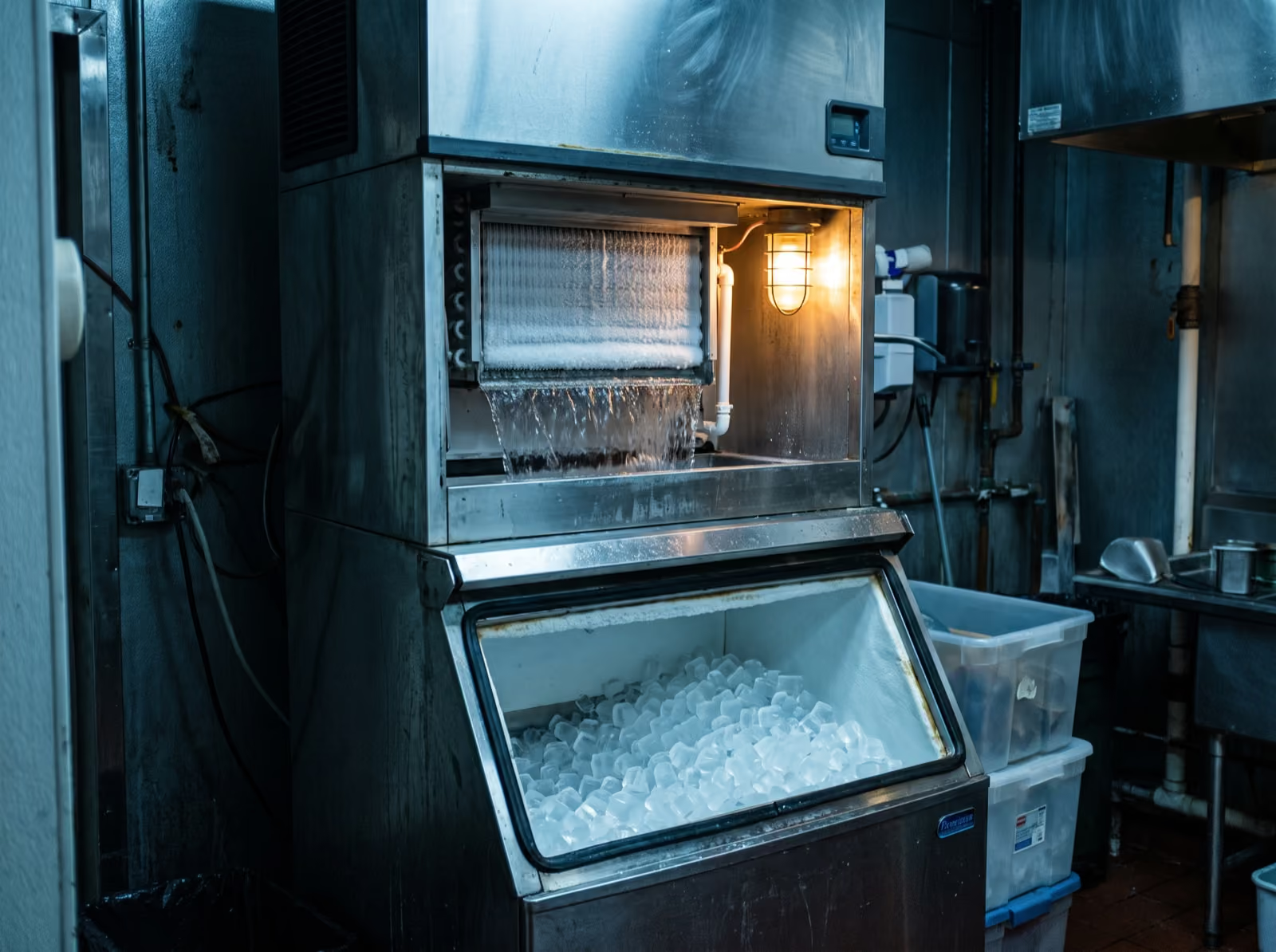
Size the machine for your busiest day in summer, with room to spare, and read its output at hot conditions. Pick the ice type that fits your drinks and displays. Put it where it gets cool air, filtered water and a proper drain, and plan cleaning and filters from day one.
Count your busiest day
Start with your own numbers. A common rule of thumb for restaurants is about a pound and a half of ice per guest a day. Bars, drive-thrus and places with seafood displays use more.
Add it up for your busiest day of the year, not an average Tuesday. Then add room on top, because guests drink more in summer and the machine makes less.
Remember the bin. The machine makes ice all day and night. The bin holds what you need for the rush. A bigger bin can cover a peak that a bigger head alone can't.
Ice makers slow down in heat
Every machine lists how many pounds it makes in 24 hours. That number depends on the air and water temperature around it.
Spec sheets usually list output at more than one set of conditions. Look for the number at hot air and warm water. That's closer to what you'll get in July in a busy kitchen.
Ice machine already falling behind?
Match it to the job
- Full or half cube: Melts slowly. The standard for soft drinks and cocktails.
- Nugget: Soft and chewable. Popular in drinks and blended beverages, and many guests ask for it.
- Flake: Packs tight and molds around food. Best for seafood, produce and salad bar displays.
Some stores need two machines: cubes for the bar and flakes for the display.
Cool air, clean water, a real drain
Location decides how hard the machine works for its whole life.
- Air: Keep it away from fryers, ovens and dish machines. An air-cooled machine needs the clearance its manual calls for.
- Water: Plan a filter on the water line from day one. Hard water is the top cause of scale and service calls.
- Drain: It needs an open drain with the right air gap. A machine that can't drain floods the floor.
- Power: Give it its own circuit, sized to the label.
If the only spot is hot, ask about a remote condenser that sits outside or on the roof. It moves the heat out of the kitchen.
Cleaning and service
Put descaling and sanitizing on the calendar the day the machine goes in. Write down the model and serial number, and keep the manual where the crew can find it. A new machine that starts with a filter and a schedule stays a good machine longer.
More guides for managers
 Free guide
Why commercial ice machines break down
The five reasons a commercial ice machine goes down, the three a manager can fix today, and when it's time to call a technician.
Read the guide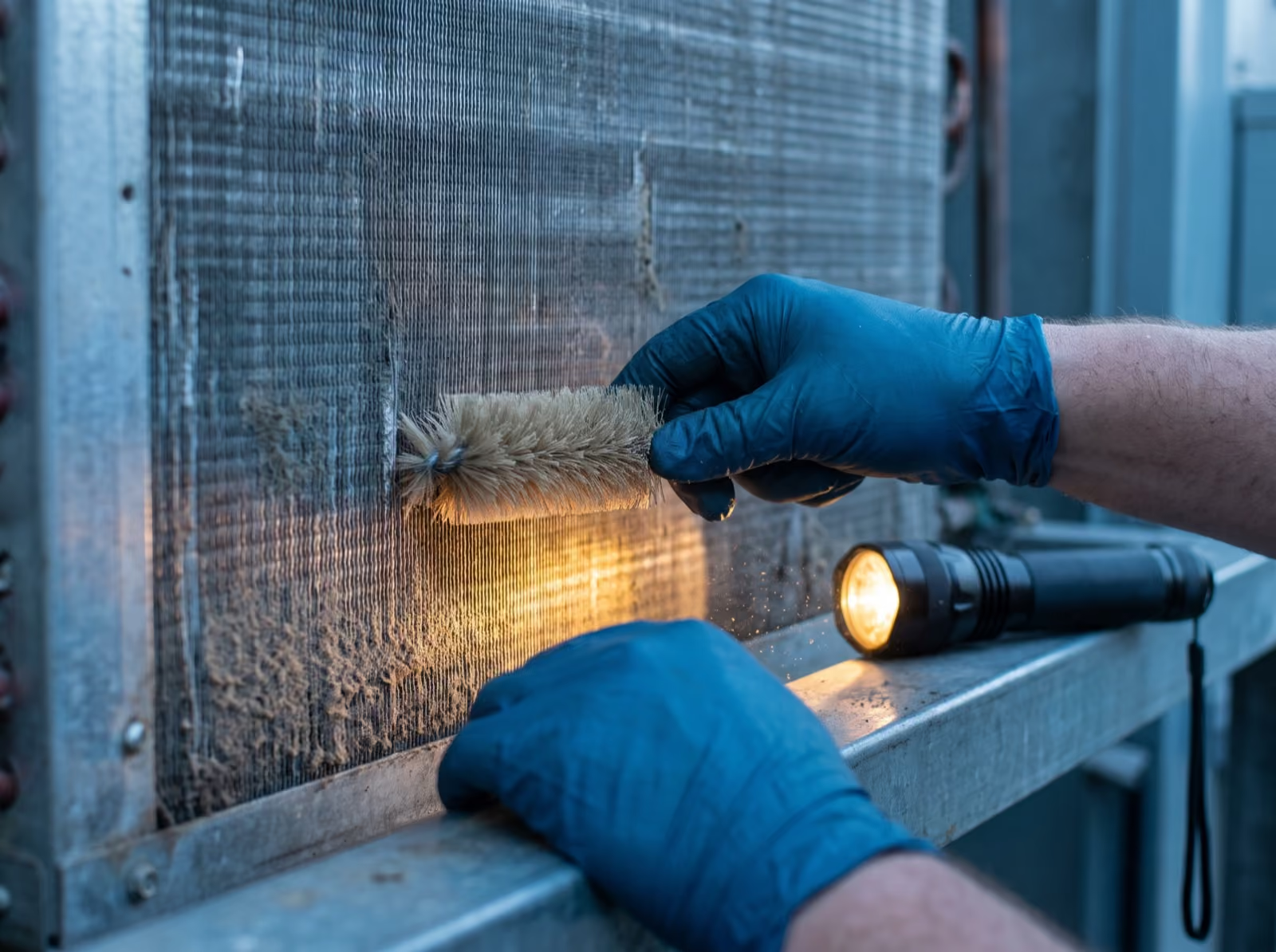 Free guide
Water filters for ice machines: the cheapest fix you'll buy
Hard water scales up ice machines and makes cloudy, bad-tasting ice. What a water filter does, how often to change it and the signs it's overdue.
Read the guide
Ice machine can't keep up? Call us.
If your machine runs all day and the bin is still low, it may be undersized, scaled up or failing. A technician can tell you which.
See ice machine repair for what we fix. If it's out of ice now, call (636) 327-8349. For an emergency, a technician is on site within four hours. And it stays fixed. 98% of our calls are completed in one trip.