The short answer
Pick based on the utilities the building has, your menu, your local energy prices and what your crew knows. Gas heats fast and is common on the line. Electric is simpler to install where there's no gas, and often cooks evenly. Whatever you choose, match it across stores so parts and training stay the same.
Start with the utilities
Before you compare equipment, find out what the space can handle.
- Gas: Is there a gas line, and is it big enough for everything you plan to run at once? Adding or upsizing a line costs money and time.
- Electric: Does the panel have room, and the right voltage and amps, for the equipment? Big electric fryers and ovens draw a lot of power.
- Hood: Gas cooking equipment needs to sit under a hood. Ask your local code official what's required for your equipment.
The building's answer often decides the question before menu or price do.
Different strengths
Gas lights right away and gives cooks direct control over the flame. Many cooks prefer it on open burners and woks. Gas equipment can often keep running in a power outage, if it has a standing pilot.
Electric heats steadily and often holds an even temperature. Many electric ovens and fryers have tight temperature control. Electric equipment doesn't burn fuel in the kitchen, so it can add less heat to the room.
Need a second opinion on your line?
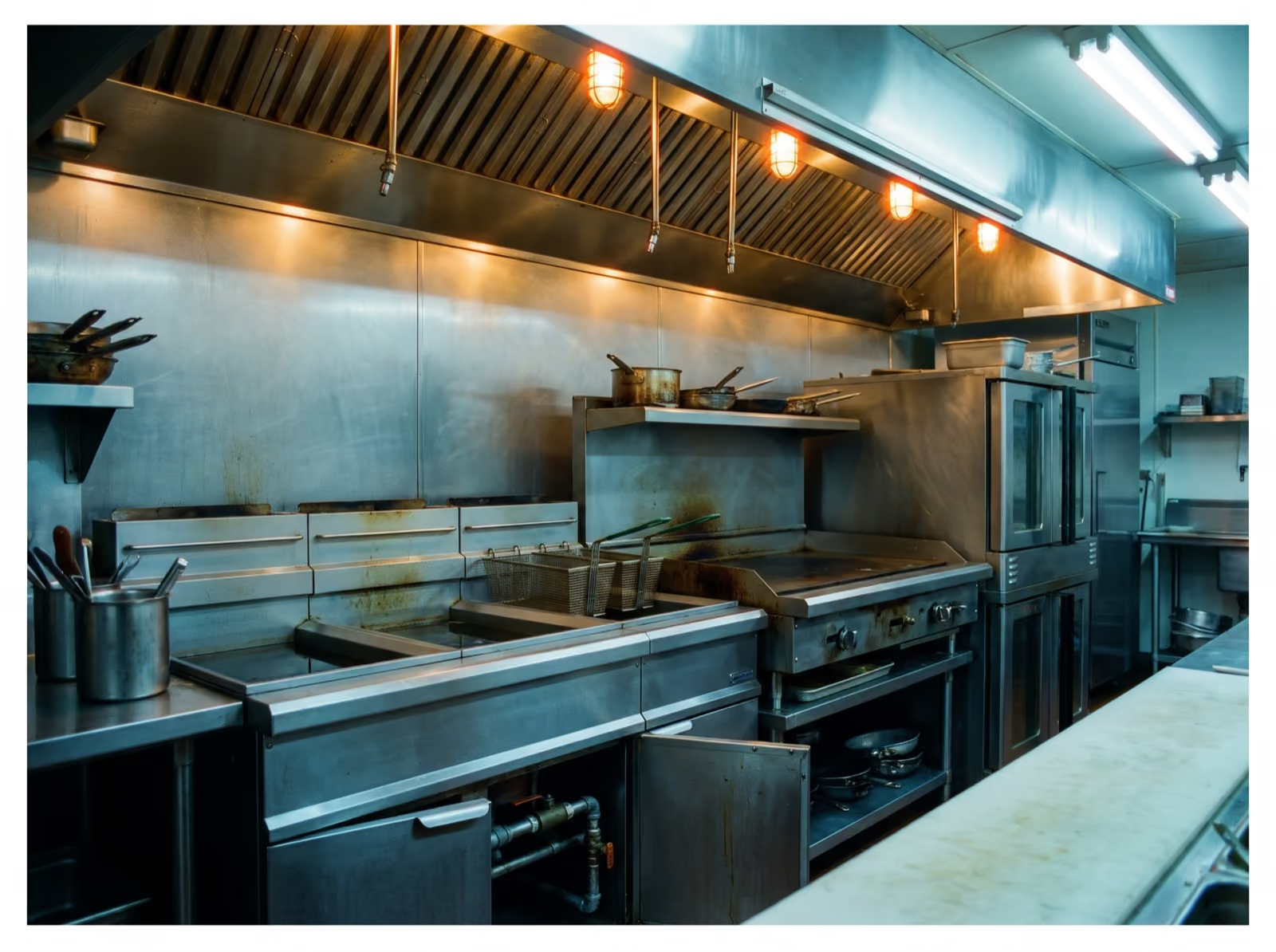
Check your own rates
Which one costs less to run depends on your local gas and electric rates, and they change. Ask your utility for your commercial rates. Then compare the energy rating on the equipment you're looking at.
Look for ENERGY STAR models in either fuel. Some utilities offer rebates on qualified equipment, which can change the math.
Different parts fail
From the repair side, the two fail in different ways.
- Gas equipment has pilots, igniters, thermocouples, gas valves and burners. Dirty burners and failed safety parts are common calls.
- Electric equipment has heating elements, contactors, thermostats and wiring. Burned-out elements and failed contactors are common calls.
Neither is trouble-free. Both last longer with daily cleaning and planned maintenance.
One set of parts, one way to train
For a restaurant group, the same equipment in every store is worth a lot. Cooks move between stores without retraining. Managers learn one set of warning signs. Your repair company can stock the parts you use most.
If you're adding a store, look at what your other stores run before you choose.
More guides for managers
 Free guide
Repair or replace? Six questions to ask first
Repair or replace a walk-in, fryer or oven? Six questions on age, warranty, repair history, cost, parts and safety to answer first.
Read the guide Free guide
Fryer care that prevents a service call
Daily fryer care, oil changes, boil-outs and the signs your commercial fryer needs a technician before it goes down.
Read the guide
Opening a new store? Call us before the line goes in.
A repair technician sees what fails and why. That's useful to know before you sign for new equipment.
See kitchen equipment repair for what we fix, gas and electric. If something is down now, call (636) 327-8349. For an emergency, a technician is on site within four hours. And it stays fixed. 98% of our calls are completed in one trip.