The short answer
Skim and filter the oil every day, and change it when it turns dark, smells off, smokes or foams. Keep the temperature where the recipe says, boil out the vat every few months, and have a technician check the fryer once a year. Call for service when the oil won't heat up or hold its temperature.
Skim, filter, wipe
- Skim crumbs out of the oil during the shift.
- Filter the oil at least once a day, at close. On busy days, filter it more often.
- Wipe down the outside of the fryer and the area around it.
- Run the baskets through the dish machine, then dry them all the way before they go back in. Water and hot oil don't mix.
- If the fryer has an idle or standby mode, use it in slow hours. Oil lasts longer at a lower temperature.
Put the fryer on the closing checklist so it gets done every night, by name, by someone.
When it looks, smells or acts old
Filtering stretches the life of the oil. It doesn't make it last forever. Change the oil when:
- It turns dark brown.
- It smells off, or the food tastes off.
- It smokes at your normal frying temperature.
- It foams up and the foam doesn't settle.
Old oil does more than ruin the food. It breaks down faster, smokes and leaves a hard crust on the vat and the heating parts. New oil costs far less than a new fryer.
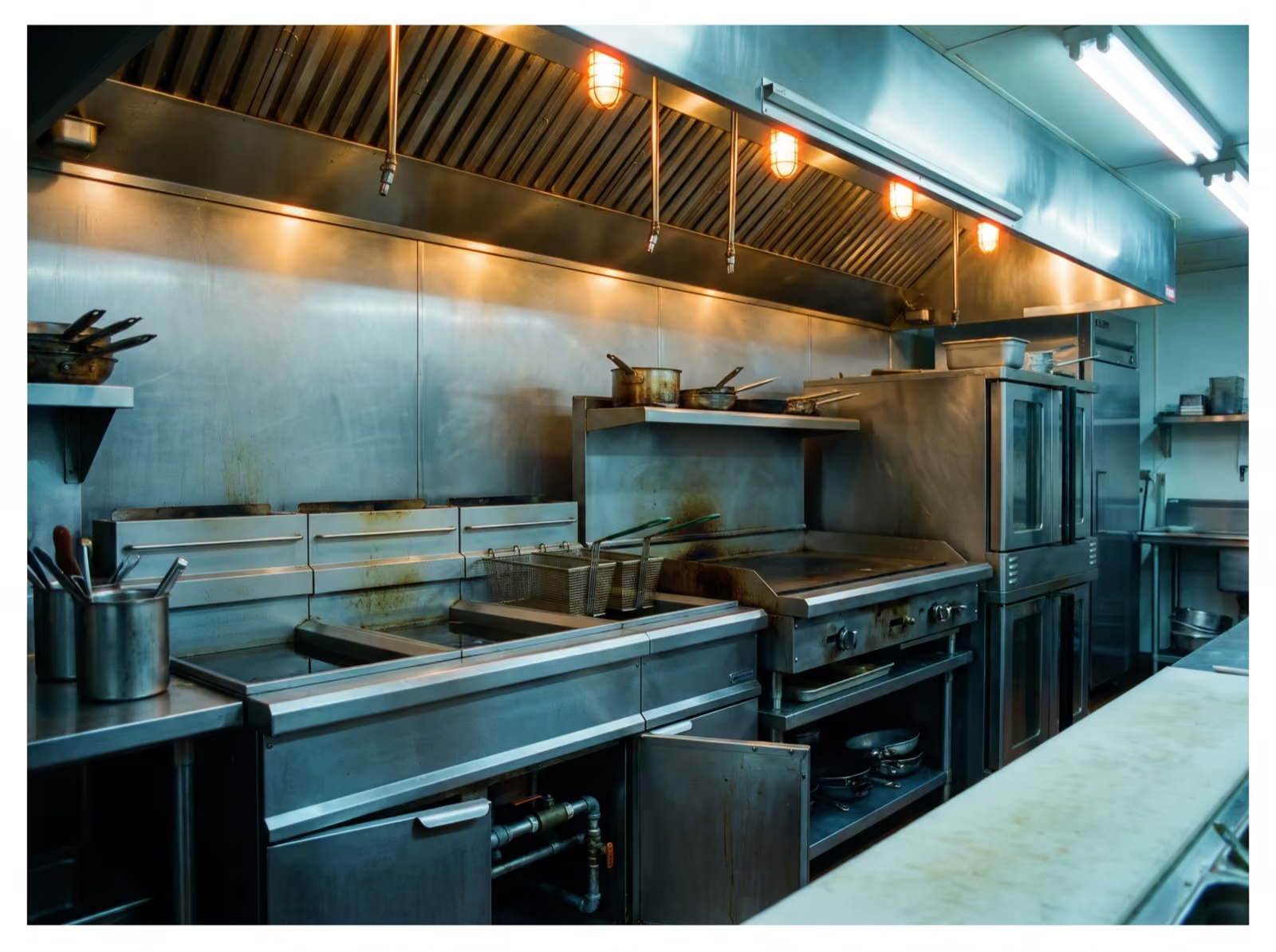
Hotter doesn't mean faster
Turning the fryer up past the recipe can cut the cook time. It also burns the oil. Burnt oil makes food taste bitter, and you'll be changing it sooner.
Keep the setting where the recipe and the manual say. If the oil won't hold that temperature, the fryer needs a repair. Don't turn the dial up to cover for it.
The deep clean that filtering misses
A boil-out clears the baked-on oil and carbon that daily filtering leaves behind. Follow the schedule in your fryer's manual, and do it at least every few months.
- Turn the fryer off and let the oil cool. Then drain it all.
- Fill the vat with water to the fill line and add a fryer boil-out cleaner.
- Turn the fryer on and bring the water to a simmer, not a rolling boil. Some fryers have a boil-out setting for this.
- Scrub the inside of the vat with a long-handled, soft-bristle brush.
- Let it simmer for the time on the cleaner's label, then drain it.
- Rinse with clean water and dry the vat completely before the oil goes back in.
Don't skip that last step. Water left in the vat makes hot oil pop and spatter.
Once a year, and when it acts up
Have a technician open the fryer up once a year. They check the thermostat, the safety shutoff, the burners or heating elements and the gas parts. Worn parts get replaced on your schedule, before they take the fryer down in the middle of a shift.
Call for service when:
- The oil takes a long time to heat up, or won't hold its temperature.
- The fryer is slow to recover after you drop a full basket.
- The pilot light keeps going out.
- The fryer shuts itself off during a shift.
If you smell gas, turn the fryer off, get your crew outside and call the gas company from there.
For an emergency, FastFix is on site within four hours. And we fix it once: 98% of our calls are completed in one trip.
More guides for managers
 Free guide
Repair or replace? Six questions to ask first
Repair or replace a walk-in, fryer or oven? Six questions on age, warranty, repair history, cost, parts and safety to answer first.
Read the guide Free guide
A maintenance calendar for a restaurant group
A daily, monthly, quarterly and yearly maintenance calendar for restaurant groups, plus the plan for when something goes down anyway.
Read the guide
Fryer down, or due for its yearly check?
See what we fix on our kitchen equipment page, or call (636) 327-8349 and we'll get the line back up and running.