The short answer
Check probe thermometers in a glass of ice water: a good one reads 32°F. Do it daily, after a thermometer is dropped, and any time a reading looks wrong. Adjust or replace the ones that are off. When a cooler, oven or warmer dial disagrees with a checked probe, the equipment needs service.
The lines are tight
Cold food has to stay at 41°F or below. Hot-held food has to stay at 135°F or above. A thermometer that reads three degrees low can show 40°F on food that's really at 43°F.
That's how a store passes its own checks and fails an inspection, or throws out food that was fine.
The ice-water test
- Fill a glass with crushed ice, then add cold water to the top. Stir it and let it sit a minute.
- Put the probe in the middle, at least two inches deep. Don't let it touch the sides or bottom.
- Wait for the reading to settle.
- It should read 32°F. If it doesn't, adjust it. Many dial probes have a nut under the head. Many digital ones have a reset button. Follow the maker's directions.
- If it can't be adjusted, replace it.
Some kitchens also check at boiling, but boiling temperature changes with altitude and is harder to do safely. The ice test is enough for daily use.
Equipment dial reading wrong?
More than you'd think
- At the start of each shift, or at least daily.
- Any time a thermometer is dropped.
- When it's moved from very hot to very cold, like from the fryer to the walk-in.
- Any time a reading looks wrong.
Keep a few spare probes. When one is off, the crew can grab another instead of guessing.
Check it against a probe
Coolers, ovens, fryers and warmers all have their own thermostat and display. Those drift too.
- Coolers: Put a checked probe in a glass of water on a middle shelf overnight. Compare it to the display in the morning.
- Ovens: Use an oven thermometer in the middle of the oven after a full heat-up.
- Fryers: Use a fry thermometer in the oil and compare it to the setting.
- Warmers and steam tables: Probe the food, not just the air.
If the equipment's reading and a checked probe disagree by more than a couple of degrees, have it serviced. The fix may be a sensor or a thermostat, and that's a technician's job.
Log the checks
Add a line to your temperature log for the thermometer check: the date, the probe and who checked it. It shows an inspector your numbers can be trusted.
More guides for managers
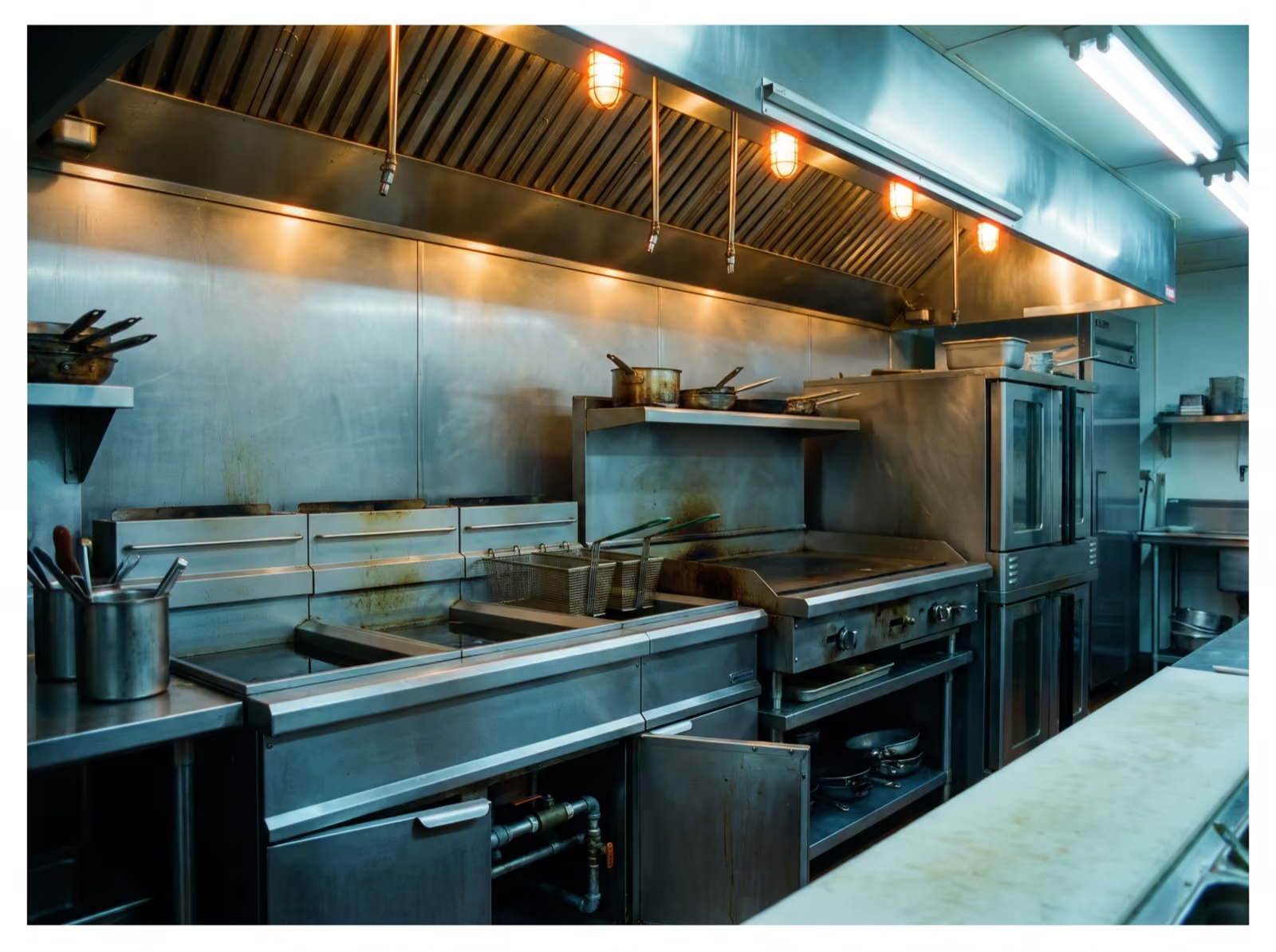 Free guide
135°F: keeping steam tables and warmers hot enough
Hot food has to hold at 135°F or above. How to run steam tables and warmers so they keep it there, and the signs one is failing.
Read the guide Free guide
What health inspectors check on your equipment
What a health inspector checks on your walk-ins, reach-ins, ice machine, dish machine and sinks, and how to get your equipment ready.
Read the guide
Probe says one thing, the dial says another? Call us.
A cooler or oven that reads wrong is working from bad information. Fix the sensor before it costs you food.
See kitchen equipment repair for what we fix, and refrigeration repair for coolers. Call (636) 327-8349. For an emergency, a technician is on site within four hours. And it stays fixed. 98% of our calls are completed in one trip.