The short answer
Replace a reach-in when it's old, the compressor or cabinet is failing, and the repairs keep coming. Repair it when the problem is a gasket, a fan, a sensor or a dirty coil, the parts that wear out on every unit. Get a technician's diagnosis first, so you're deciding on facts.
Six things to watch
These six signs mean the reach-in needs a look. Some point to a small repair. Some point to the end.
- It runs all the time. The compressor never gets a break. Often a dirty coil or a bad gasket, sometimes a tired compressor.
- The motor area runs hot. A compressor that's hot to the touch is overworking. That shortens its life.
- Water inside or around the door. Sweat around the door usually means a gasket or a door that doesn't close. Water inside can mean a drain or a temperature problem.
- It won't hold 41°F. Food that's supposed to be cold has to stay at 41°F or below. A reach-in that drifts above it is a food safety problem now.
- The power bill went up. A box that runs longer to hold temperature costs more every hour.
- It's past ten years old. Many reach-ins last ten to fifteen years. After ten, each big repair is worth a second thought.
The wear parts
Most of what goes wrong on a reach-in is a part that wears out on every unit. These are usually worth fixing, even on an older box.
- A torn or flattened door gasket
- A door hinge or closer that lets the door hang open
- A failed evaporator or condenser fan motor
- A bad thermostat or temperature sensor
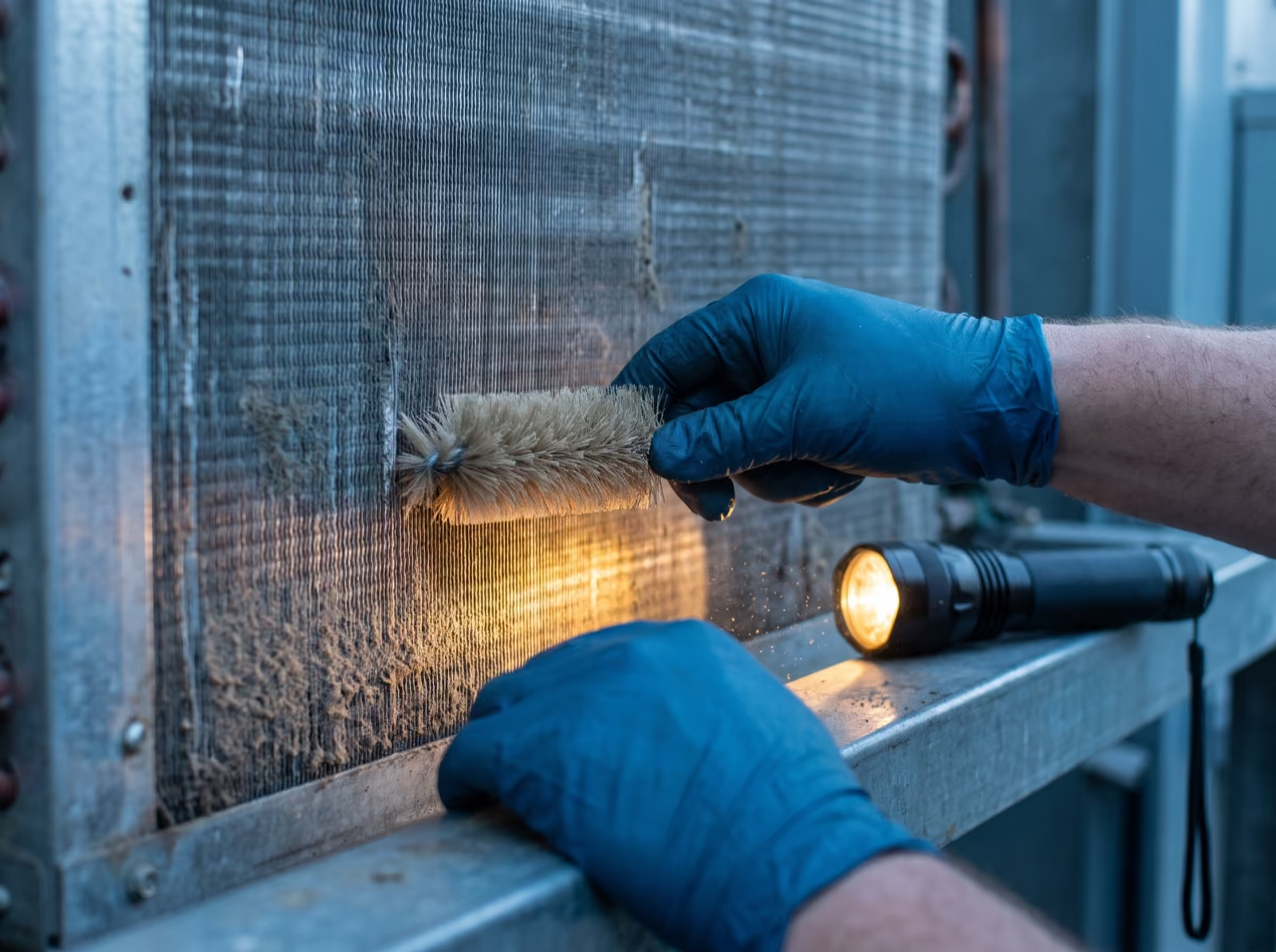
- A dirty condenser coil
- A clogged drain line
Need a diagnosis before you decide?
Big parts on an old box
Replacing makes sense when a big repair lands on an old unit. Think a failed compressor, a refrigerant leak in the cabinet, or rusted and cracked walls where the insulation is wet.
Look at the history too. If the same reach-in has needed three or four calls this year, add them up. The money you spend keeping it running might cover most of a new one.
Older units can also run on refrigerants that are no longer made. When those need a recharge, the cost goes up every year.
Keep the numbers in one place
If you run several stores, keep a simple list of every reach-in: the store, the model, the age, and every repair with its cost. When one starts to cost too much, you'll see it on paper before it fails on a Saturday.
A technician can tell you what failed and what's likely next. Ask for that in writing, so you can plan the replacement for a slow month.
More guides for managers
 Free guide
Repair or replace? Six questions to ask first
Repair or replace a walk-in, fryer or oven? Six questions on age, warranty, repair history, cost, parts and safety to answer first.
Read the guide Free guide
Six habits that make a reach-in last
Airflow, clean coils, tight gaskets, a closed door, a level cabinet and a real temperature log: six habits that add years to restaurant refrigeration.
Read the guide
Not sure if it's worth fixing? Call and find out.
A diagnosis tells you if the problem is a gasket or a compressor. That's the difference between a small bill and a new unit.
See refrigeration repair for what we fix. If the reach-in is warm now, call (636) 327-8349. For an emergency, a technician is on site within four hours. And it stays fixed. 98% of our calls are completed in one trip.