The short answer
Clean spills as they happen and wipe the oven down every day. Pull and wash the racks weekly, keep the door gasket and hinges in shape, and check the temperature with an oven thermometer. Call when the oven runs hot or cold, heats slowly, or the fan or burners act up.
Spills, crumbs and a wipe-down
- Clean spills right away. A boil-over baked on for a shift turns into smoke, odor and a fire risk.
- Clear the crumbs. Burnt bits on the floor of the oven smoke and change how food tastes.
- Wipe the inside at close. Once the oven is cool, use a damp towel and the cleaner the manual allows. A well-kept oven often needs only warm, soapy water.
- Wipe the door glass and gasket. Grease on the gasket makes it stiff and stops it sealing.
Racks, fans and the door
Racks. Pull them and soak them in hot, soapy water. Scrub off what's left with a brush.
Convection fan. On a convection oven, check that the fan guard is clean and the fan spins freely. Grease on the fan throws it off balance.
Door. Open and close it a few times. It should close firmly and seal on all sides. A door that hangs open lets heat out and makes the oven work harder.
Outside. Wipe the controls and knobs. Grease on a control panel works its way into the electronics.
Check it, don't trust the dial
The dial says 350°F. The oven might be at 325°F, or 375°F. A few degrees off changes cook times and quality.
Put an oven thermometer in the middle of the oven. Set it to a common temperature and let it heat for twenty minutes. Compare the reading to the dial. Check it again with the thermometer on each side.
If the reading is off by more than the manual allows, or one side runs hotter than the other, the thermostat, sensor or burner needs service.
Descale on schedule
Combi ovens use steam, and steam means scale from hard water. Run the cleaning and descaling cycles the manual calls for. Use the chemicals the maker specifies. A combi that skips its cleaning cycles builds scale in the steam generator, and that's an expensive part.
Three habits
- Spraying harsh oven cleaner on parts the manual says to avoid, like fans, gaskets and probes.
- Slamming the door, which wears the hinges and gasket.
- Lining the oven floor with foil, which can block airflow and burners.
The signs to watch
- It takes longer than it used to to reach temperature.
- Food comes out burnt on one side and raw on the other.
- The fan squeals, rattles or doesn't spin.
- A gas oven won't light, or the pilot keeps going out.
- The oven shuts off mid-service or shows an error code.
More guides for managers
 Free guide
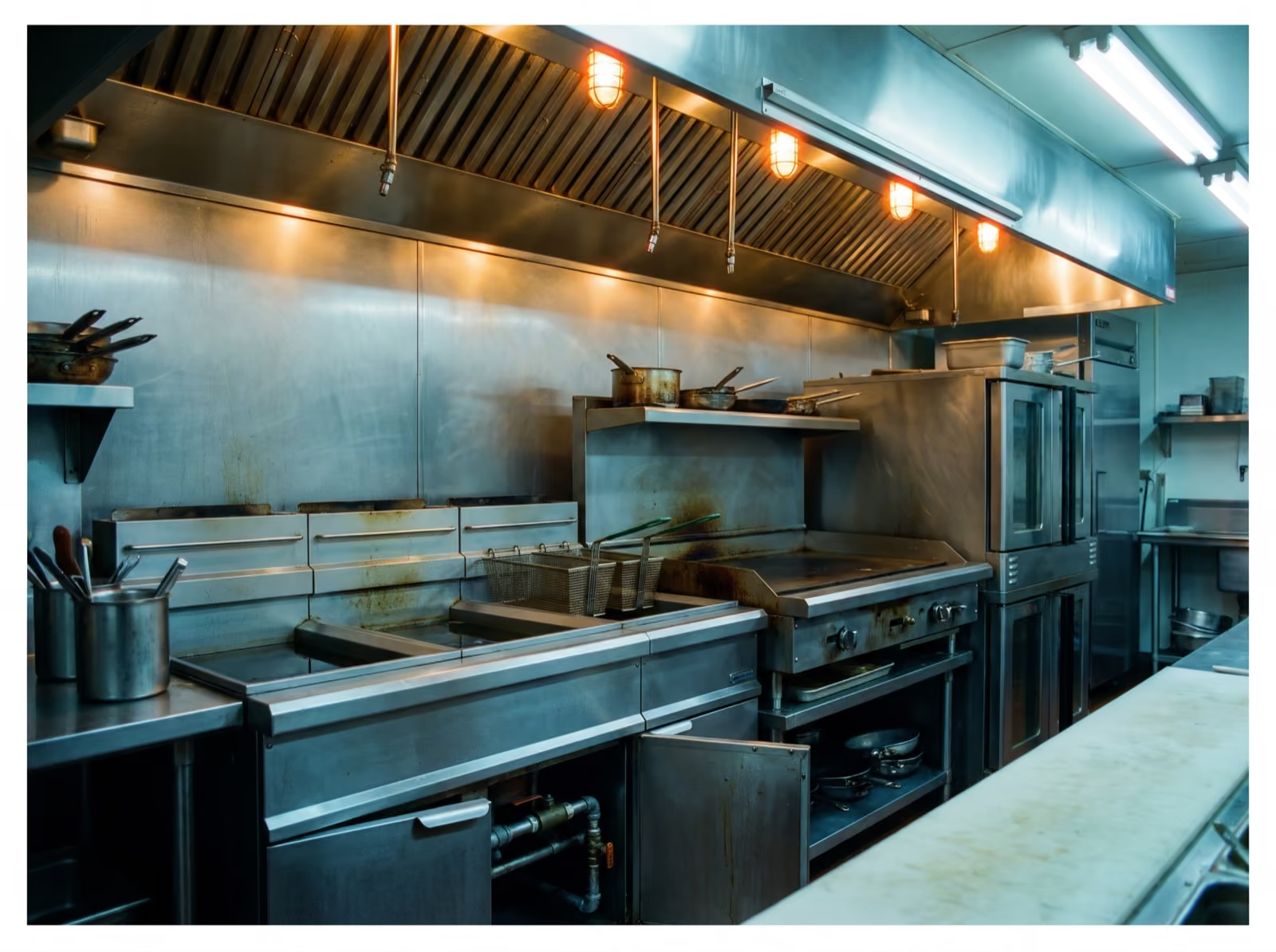
Pizza oven care: deck and conveyor ovens
Deck ovens need dry stones and conveyor ovens need clean belts. How to clean each kind of pizza oven, and the signs one needs a technician.
Read the guide Free guide
Fryer care that prevents a service call
Daily fryer care, oil changes, boil-outs and the signs your commercial fryer needs a technician before it goes down.
Read the guide
Oven running hot, cold or not at all? Call us.
An oven that drifts is close to a failed part. Catch it before the rush.
See kitchen equipment repair for what we fix. If the oven is down now, call (636) 327-8349. For an emergency, a technician is on site within four hours. And it stays fixed. 98% of our calls are completed in one trip.