The short answer
Clean draft lines every two weeks with a line cleaner, and do a deeper acid clean every three months. That's the schedule the Brewers Association's quality guide for draft beer sets. Keep the keg cooler steady near 38°F, because warm beer foams no matter how clean the lines are.
Four things you can't see
Beer is food for microbes, and the lines stay wet and dark. Four things build up when lines aren't cleaned.
- Yeast. Shows up as a white or gray film on faucets, couplers and drains.
- Mold. Shows up as a brown or black growth on the same parts.
- Bacteria. Mostly harmless to guests, but it turns beer sour and cloudy.
- Beer stone. A hard mineral scale that forms inside the lines and gives bacteria a place to hide.
Guests won't see any of it. They'll taste it, and they'll order something else next time.
Every two weeks, without skipping
A line cleaning pushes a cleaning solution through every line from the coupler to the faucet. It sits for the time the cleaner calls for, then gets flushed with clean water until no cleaner is left.
At each cleaning, take apart and scrub the faucets and couplers. That's where the visible growth lives.
Every three months, run an acid cleaner to break down beer stone. Replace old vinyl lines on the schedule your line supplier recommends, since they get harder to clean as they age.
Write down every cleaning: the date, the lines and who did it. A missed cleaning is easy to spot on paper.
Keg cooler not holding temperature?
Warm beer foams
Draft systems are balanced for cold beer. When the keg warms up even a few degrees, the gas comes out of the beer and the tap pours foam. Every foamy pour is beer you paid for and poured down the drain.
Keep the keg cooler or walk-in steady near 38°F. Check it at the start of every shift, the same way you check the other coolers.
If the beer foams and the lines are clean, check the cooler before you blame the gas. Look for these signs:
- The keg cooler reads warm, or swings up and down during the day.
- The door gasket is torn, or the door doesn't close on its own.
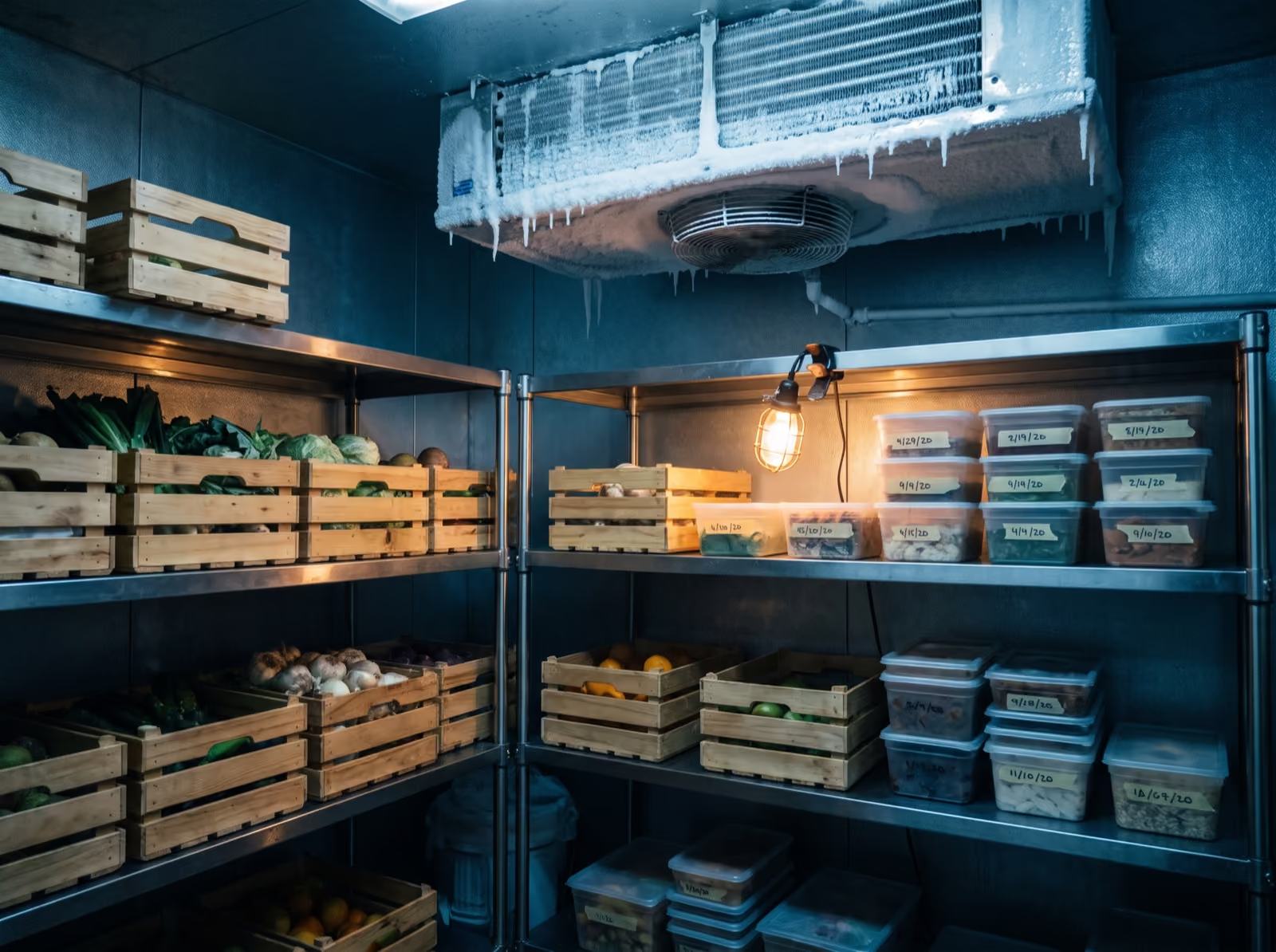
- Ice is building up on the coil inside the box.
- The condenser is dusty or blocked by kegs and cases.
Pick one person and one day
Many bars use a line-cleaning service. Others train one person to do it. Either works if it happens every two weeks without skipping.
What matters is that someone owns it. Put it on the calendar for the same day every other week, with a name next to it.
More guides for managers
 Free guide
Bar coolers, keg boxes and glass chillers: keep the bar cold
Bar refrigeration lives in a tight, hot, wet spot. How to keep back-bar coolers, keg boxes and glass chillers cold through a busy night.
Read the guide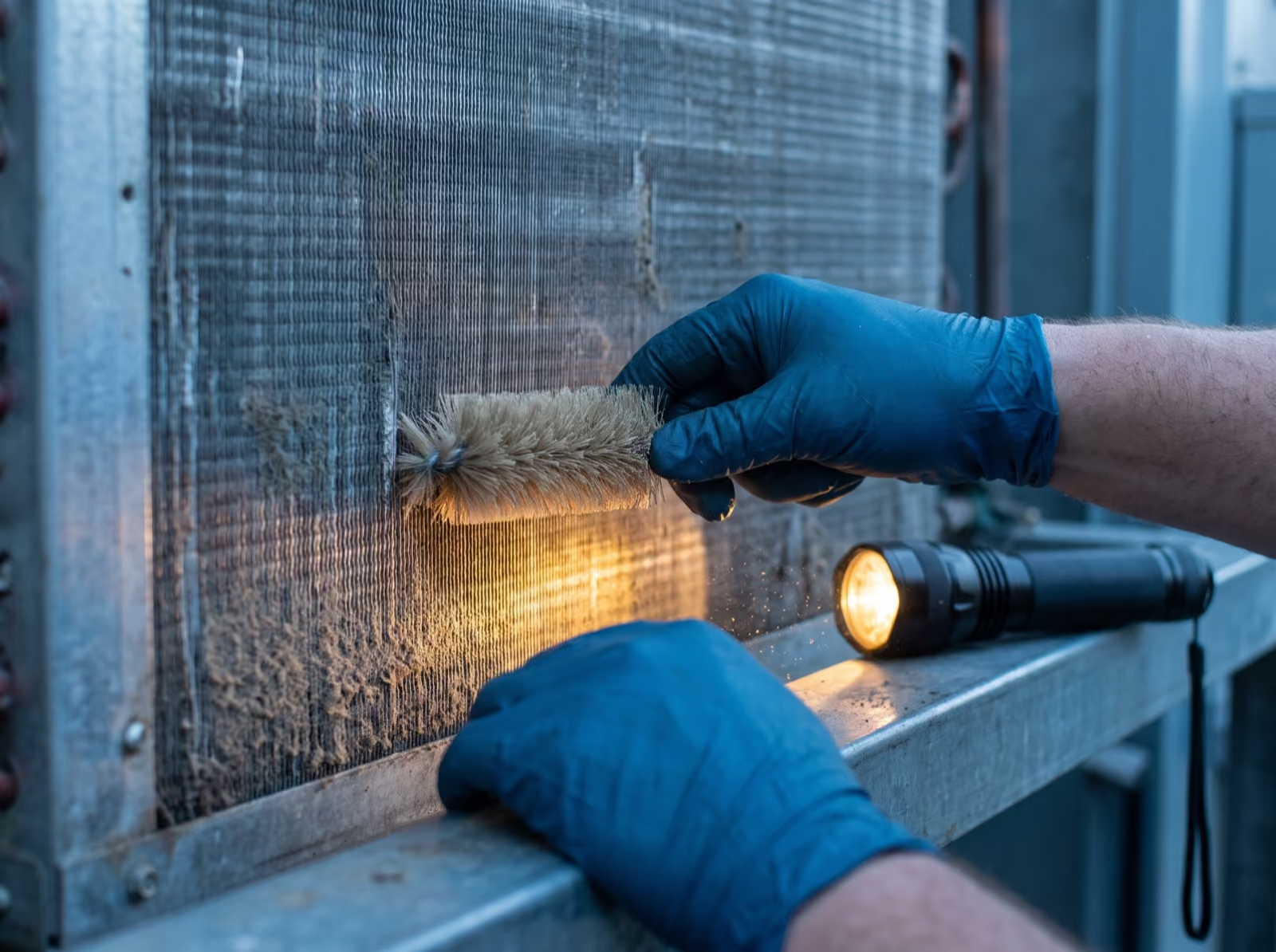 Free guide
Six habits that make a reach-in last
Airflow, clean coils, tight gaskets, a closed door, a level cabinet and a real temperature log: six habits that add years to restaurant refrigeration.
Read the guide
Lines clean and still pouring foam? Check the cooler.
If the lines are clean and the beer still foams, the keg box may not be holding temperature. That's a refrigeration call.
See refrigeration repair for what we fix, including bar refrigeration. Call (636) 327-8349. For an emergency, a technician is on site within four hours. And it stays fixed. 98% of our calls are completed in one trip.