The short answer
Keep refrigeration away from cooking heat, give every unit the clearance its manual calls for, keep cooking equipment under the hood, and leave room for a technician to reach the back. Keep walkways, shut-offs and electrical panels clear. Plan this before the equipment goes in.
Heat moves
Cooking equipment throws off heat. Refrigeration dumps heat out of its condenser. Put them side by side and each one makes the other work harder.
A reach-in beside a charbroiler pulls in hot air to cool its condenser. It runs longer, wears faster and struggles to hold 41°F. An ice machine next to a dish machine faces the same problem.
Six to plan around
1. Keep cold away from hot. Put coolers, freezers and ice machines away from fryers, ovens, broilers and dish machines. If they have to be close, put a wall or an air gap between them.
2. Give every unit its clearance. The manual lists how much space each unit needs on the sides, back and top. Air-cooled refrigeration needs it to breathe. Cooking equipment needs it to stay a safe distance from walls.
3. Keep cooking under the hood. Fryers, griddles, ranges and broilers belong fully under the exhaust hood. A unit sticking out past the hood spills smoke and grease into the kitchen.
Equipment struggling where it sits?
4. Leave room to service it. Line equipment on casters, with flexible gas hoses and restraint cables, can be rolled out for cleaning and repair. Equipment that's bolted in or boxed in makes every repair slower and costlier.
5. Keep shut-offs and panels clear. Gas shut-offs, water valves and electrical panels need to be reachable in seconds. The electrical code requires clear working space in front of panels. Don't stack supplies there.
6. Plan the walkways. Cooks carrying hot oil and full pans need room to pass. Tight aisles cause spills, burns and bumped equipment.
Plan them with the equipment
Ice machines, steamers, dish machines and some coolers need drains. Combi ovens and steamers need water lines, often with a filter. Put drains and water where the equipment goes, not where it's easy to plumb. A drain line run across the floor is a trip hazard and a clog waiting to happen.
Small fixes help
Most managers inherit a kitchen. You can still improve it.
- Pull equipment off the wall to its correct clearance.
- Clear boxes and supplies from around coolers.
- Add a heat shield between a cooler and the line, if one fits.
- Move the ice machine if it's beside the dish machine.
- Ask your technician which units are running hot because of where they sit.
More guides for managers
 Free guide
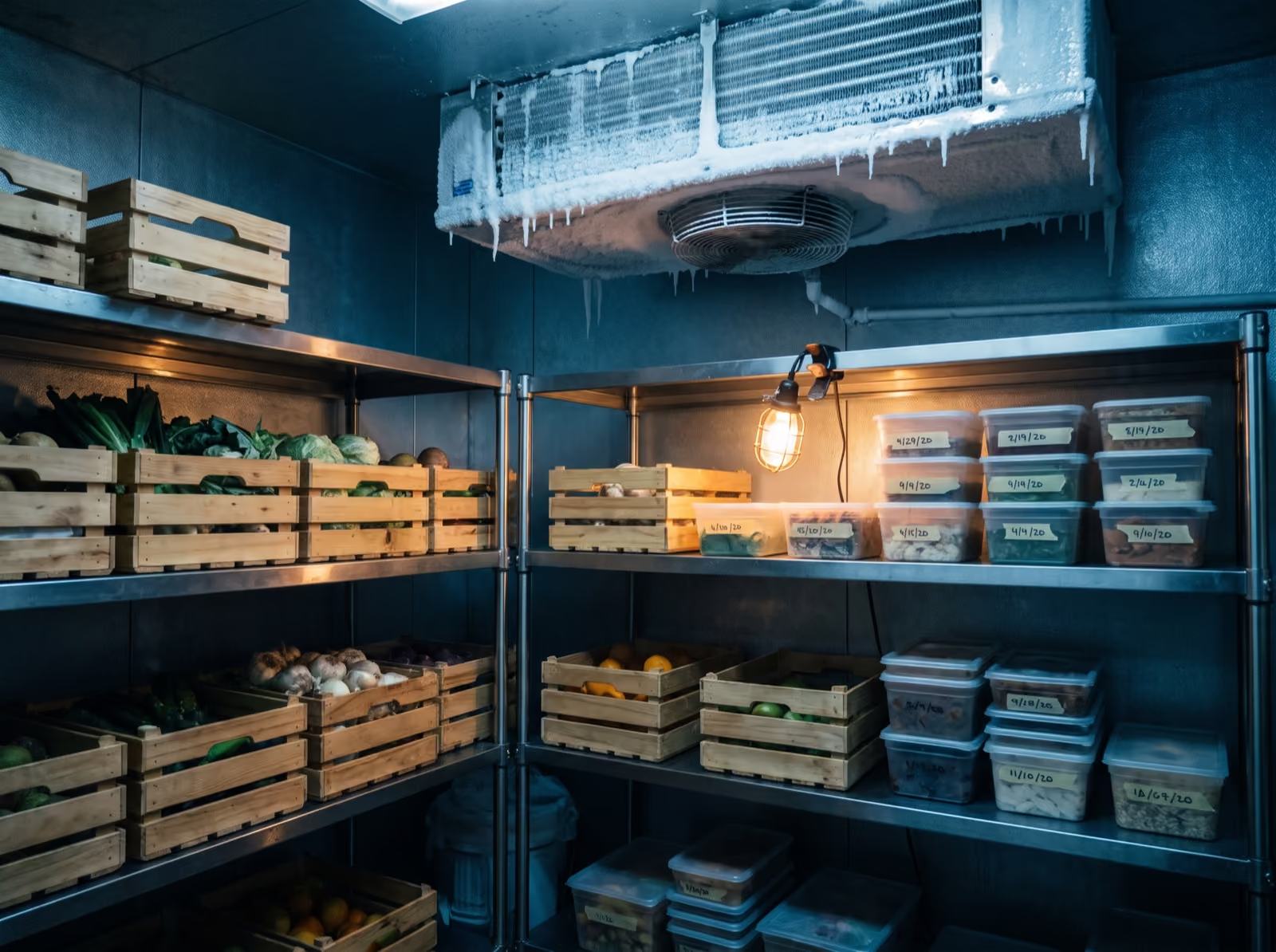
Summer heat and your refrigeration
Hot kitchens and hot roofs make walk-ins and reach-ins work harder. What to check before summer so the cold side gets through the heat.
Read the guide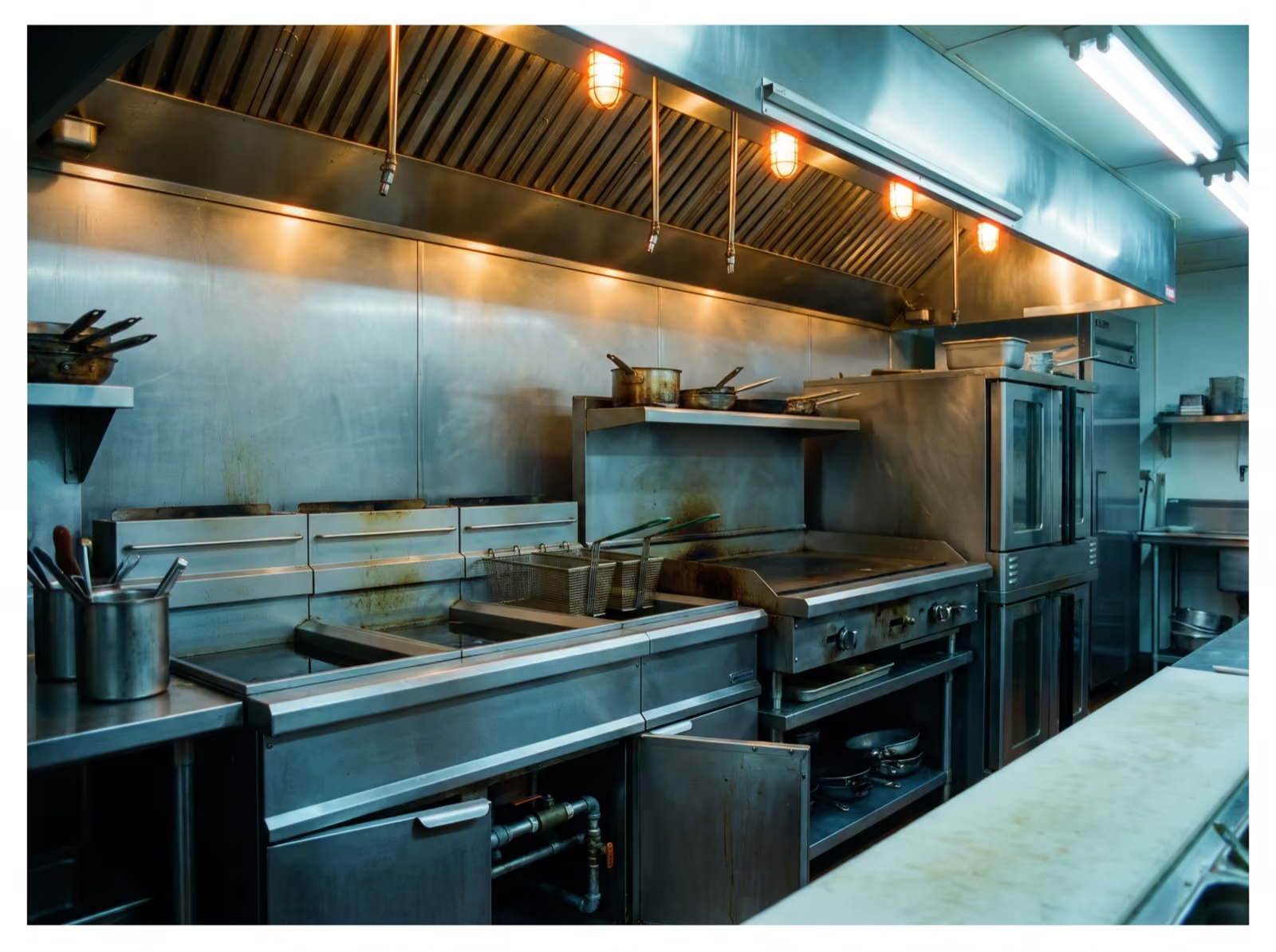 Free guide
Before you buy kitchen equipment: seven checks from the repair side
Price is one line on the quote. What to check before you buy a fryer, oven or cooler: fit, utilities, service access, parts, the warranty and used gear.
Read the guide
Equipment running hot where it sits? Call us.
A technician can tell you which units are struggling because of their spot, and what to move first.
See kitchen equipment repair for what we fix. If something is down now, call (636) 327-8349. For an emergency, a technician is on site within four hours. And it stays fixed. 98% of our calls are completed in one trip.